 EN
EN

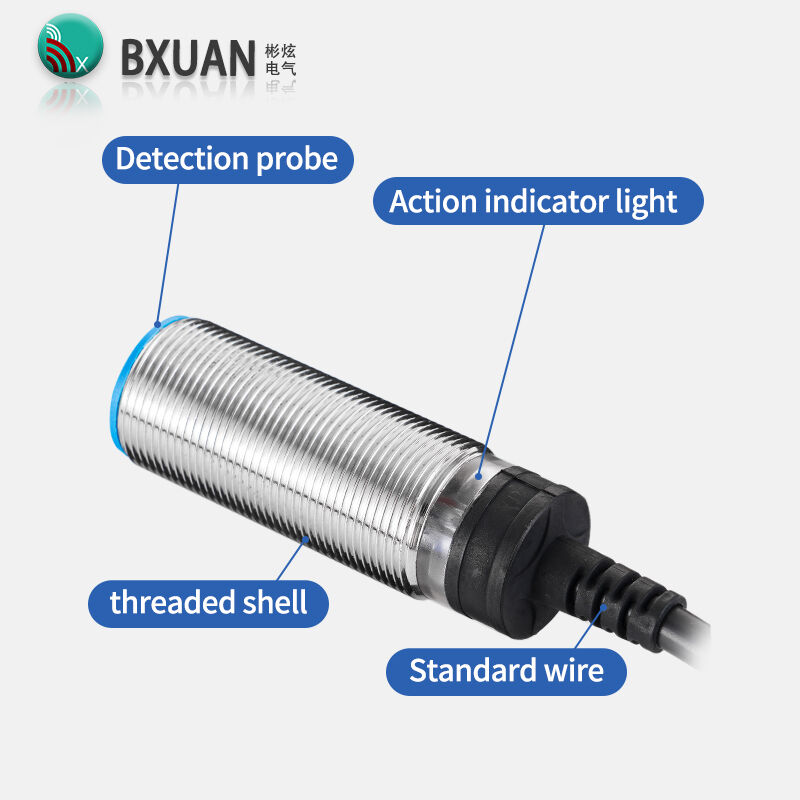
When precision matters in automated production, choosing the right detection technology can define the difference between consistent output and costly errors. A reflective sensor has become one of the most trusted tools for object positioning across countless industrial environments. Its ability to detect objects accurately without requiring a separate receiver unit makes it especially attractive for engineers designing compact, efficient machine layouts. Understanding why a reflective sensor performs so well in positioning applications starts with recognizing how its core design supports reliable, repeatable detection.
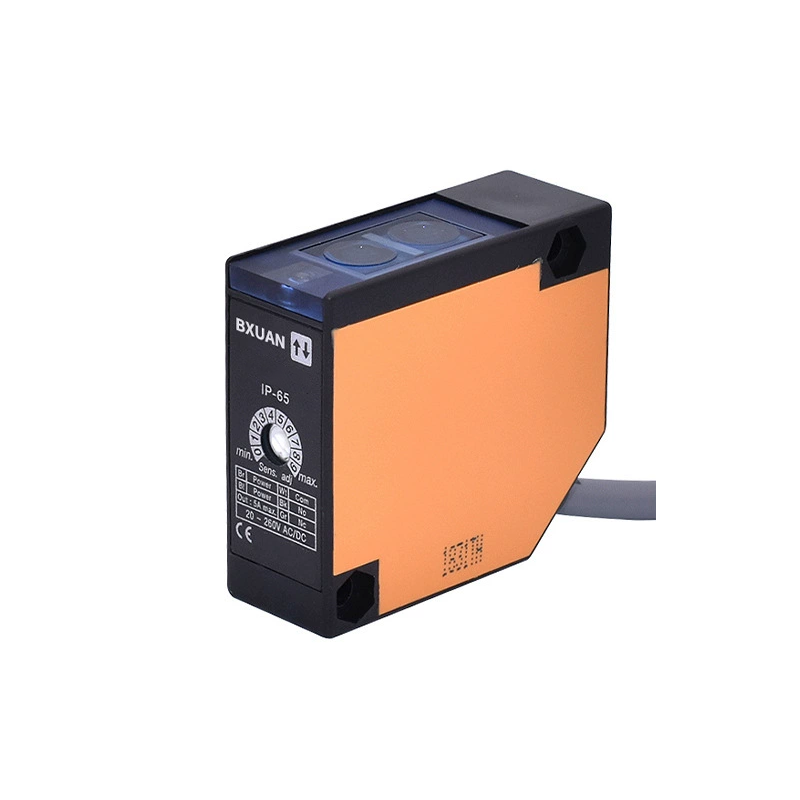
A reflective sensor integrates both the emitter and the receiver into a single housing. Light is emitted toward the target, and the same unit detects the reflected light when an object enters the sensing zone. This self-contained architecture reduces wiring complexity, simplifies mounting, and shortens commissioning time. For object positioning tasks that demand fast response and consistent signal output, a reflective sensor delivers practical advantages that more complex optical arrangements often cannot match at the same cost and installation effort.
How a Reflective Sensor Supports Precise Object Positioning
The Detection Principle Behind Positioning Accuracy
A reflective sensor works by projecting a focused beam of light, typically infrared, from its emitter. When an object moves into the detection range, that object reflects the beam back to the receiver built into the same unit. The reflective sensor registers this reflected signal and generates an output that tells the control system an object is present at a specific position. Because the reflective sensor monitors the intensity of returned light, even subtle changes in object position can be captured quickly and reliably. This makes the reflective sensor a natural fit for positioning tasks where objects must be confirmed at a defined coordinate along a conveyor, fixture, or assembly track.
Response Speed and Repeatability in Motion Control
Object positioning in automated lines often involves parts moving at significant speed. A reflective sensor operates with very short response times, typically in the millisecond range, which means the detection signal is generated almost instantly when a target enters the sensing zone. The reflective sensor also delivers strong repeatability, meaning it triggers at the same point each cycle under consistent conditions. This repeatability is critical for downstream actions such as robotic pick-and-place, labeling, or rejection systems that depend on knowing exactly where each object is at a given moment. The reflective sensor supports this without requiring beam alignment across two separate mounting points, which reduces variables that could affect repeat accuracy.
Why the Reflective Sensor Design Fits Positioning Environments
Single-Side Mounting Simplifies Machine Design
One of the most practical reasons a reflective sensor excels at object positioning is that it only requires access to one side of the detection zone. In a through-beam system, the emitter and receiver must be aligned on opposite sides of the target path. With a reflective sensor, both functions occupy one side, which opens up more machine design possibilities. Designers can place the reflective sensor where space is limited, where the opposite side is inaccessible, or where a moving element blocks traditional through-beam mounting. This flexibility allows the reflective sensor to be integrated into a wider range of positioning scenarios without compromising detection performance.
Suitability Across Object Types and Surfaces
A reflective sensor is effective at detecting a broad variety of object types, including plastic components, metal parts, cardboard packaging, glass containers, and wooden surfaces. The reflective sensor responds to the contrast in light return between an object and the background behind it. Engineers can adjust the sensitivity of a reflective sensor to account for objects with lower reflectivity, such as dark-colored or matte-finish parts, ensuring reliable positioning detection even when the target surface is not highly reflective. For applications involving mixed product types on the same line, a reflective sensor with adjustable sensitivity provides consistent positioning confirmation without requiring a sensor change between product runs.
Industrial Applications Where Reflective Sensors Lead in Positioning
Conveyor and Transfer Systems
Conveyor-based production lines represent one of the most common environments for a reflective sensor. In these settings, the reflective sensor monitors each object as it passes a defined point, triggering downstream actions such as diverters, stops, counters, or assembly robots. Because the reflective sensor only needs to be mounted on one side of the conveyor frame, installation and maintenance are straightforward. The reflective sensor can be repositioned quickly when product dimensions change, making it suitable for flexible manufacturing environments where multiple part types run on the same line at different times.
Packaging, Assembly, and Quality Checking
In packaging lines, a reflective sensor confirms that each carton, bottle, or tray is correctly positioned before filling, sealing, or labeling operations begin. A mispositioned object can cause product waste, machine downtime, or damaged goods. The reflective sensor prevents these outcomes by verifying object presence and position at each station. In assembly operations, the reflective sensor checks that components are loaded into fixtures correctly before the assembly cycle starts. For inline quality checking, a reflective sensor can detect when a part is missing, misaligned, or out of the expected position zone, generating an immediate signal that halts the process or activates a rejection mechanism. These positioning roles demonstrate why the reflective sensor is a core element in modern automated production systems.
Compact Machine Integration
Many modern machines operate with extremely tight internal clearances. The reflective sensor is available in compact form factors that can be mounted in confined spaces without sacrificing detection capability. In pick-and-place systems, CNC machine tools, or inspection stations, a small reflective sensor can be positioned directly adjacent to the working area to confirm that a part is seated correctly before a process step executes. The reflective sensor output integrates directly with PLCs and motion controllers, making it a seamless component in digitally controlled manufacturing cells.
FAQ
What makes a reflective sensor different from a through-beam sensor for positioning?
A reflective sensor combines the emitter and receiver in one unit, requiring mounting on only one side of the detection zone. A through-beam sensor separates the emitter and receiver on opposite sides. For object positioning, the reflective sensor offers simpler installation and greater layout flexibility, while a through-beam sensor typically offers longer detection range and higher immunity to surface variation.
Can a reflective sensor detect dark or low-reflectivity objects reliably?
Yes, a reflective sensor with adjustable sensitivity settings can be tuned to detect dark or matte-finish objects. The key is ensuring sufficient contrast between the target object and the background. In some cases, using a background suppression version of the reflective sensor further improves positioning accuracy when dealing with objects that have low surface reflectivity.
How far can a reflective sensor detect objects for positioning purposes?
The detection range of a reflective sensor depends on the model and the reflectivity of the target surface. Standard diffuse reflective sensor models typically operate effectively within a range of a few millimeters up to several hundred millimeters. For object positioning applications requiring detection at longer distances, choosing a reflective sensor model rated for extended range ensures stable and repeatable output throughout the production cycle.