 EN
EN

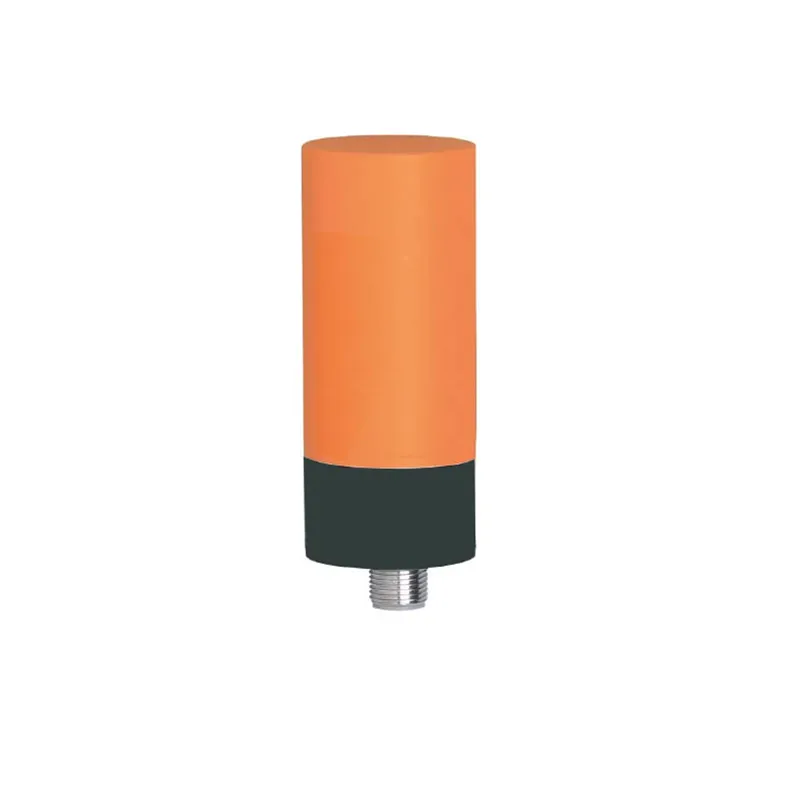
In modern industrial automation, the demand for faster and more precise detection has never been greater. A reflective sensor is one of the most effective tools available for meeting this demand. Whether on a high-speed conveyor line or in a rapid assembly process, the reflective sensor delivers real-time object detection with minimal delay, making it a cornerstone technology across multiple industries.
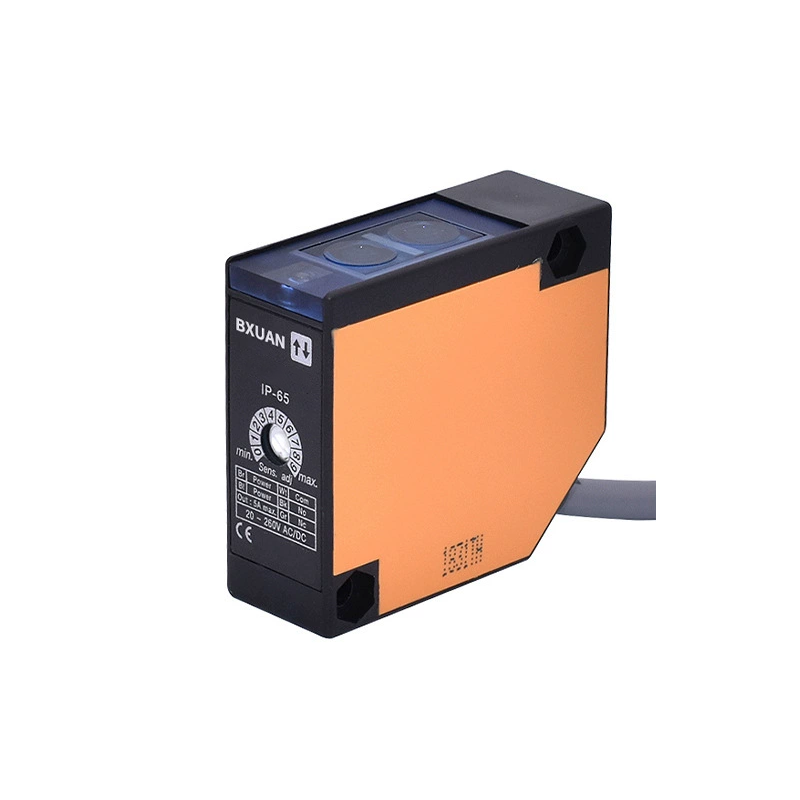
Understanding exactly how a reflective sensor supports high-speed detection requires a look at its core operating principles, its structural advantages, and the specific conditions under which it performs best. This article breaks down each of those dimensions to give engineers and system integrators the practical insight they need when selecting and deploying a reflective sensor in fast-paced environments.
The Core Operating Principle of a Reflective Sensor
How Light Emission and Reception Work Together
A reflective sensor operates by emitting a focused beam of light, typically infrared or visible red, toward a target surface. When the light strikes the object, it bounces back to the receiver integrated within the same reflective sensor housing. The receiver detects the intensity of the returned light and generates an output signal. This self-contained design means the reflective sensor does not require a separate emitter and receiver unit positioned across from each other, which simplifies installation significantly.
The speed of this detection cycle is one of the primary strengths of the reflective sensor. Because both emitter and receiver are housed together, the signal path is extremely short. The reflective sensor can complete a full detect-and-respond cycle in microseconds, which is essential when objects move past the sensing zone at high velocity. This fast internal switching capability is what makes the reflective sensor suitable for high-speed counting, positioning, and sorting applications.
Signal Processing Inside the Reflective Sensor
Beyond the optical mechanism, the reflective sensor contains internal signal processing circuitry that filters noise and stabilizes the output. When a reflective sensor is deployed in a high-speed environment, ambient light interference and vibration can cause false triggers. Advanced reflective sensor models use modulated light emission, where the emitted beam is pulsed at a specific frequency. The receiver only responds to light at that exact frequency, allowing the reflective sensor to reject ambient light and maintain accurate detection even under challenging factory floor conditions.
Structural Features That Enable High-Speed Performance
Compact Form Factor and Mounting Flexibility
The compact body of a reflective sensor is a direct contributor to its high-speed detection capability. A smaller reflective sensor can be mounted closer to the detection zone, reducing the working distance and improving response accuracy. Many reflective sensor designs use a flush-mount or bracket-mount configuration that allows precise alignment in tight mechanical spaces. When the reflective sensor is correctly aligned, the effective detection window is narrow and well-defined, which improves the timing precision for fast-moving targets.
The mounting stability of the reflective sensor also matters. In high-speed lines where vibration is constant, a poorly mounted reflective sensor can drift out of alignment. Engineers typically secure the reflective sensor with rigid brackets and verify alignment after installation to ensure the reflective sensor maintains consistent detection performance throughout the operating shift.
Detection Range and Spot Size of the Reflective Sensor
The detection range of a reflective sensor determines how far it can reliably detect objects. For high-speed applications, the reflective sensor must be set at a working distance where the light spot is focused and the return signal is strong. A reflective sensor with a very wide detection cone may pick up background surfaces or adjacent objects, causing detection errors at high line speeds. A focused reflective sensor with a narrow beam angle provides cleaner detection, especially when objects pass through the sensing zone in rapid succession.
Spot size control is particularly important when the reflective sensor is used to detect small components or edges. A reflective sensor with an adjustable sensitivity setting allows operators to fine-tune the threshold so that only the intended target triggers the output. This level of control is critical in high-speed inspection lines where the reflective sensor must discriminate between closely spaced parts without missing any.
Application Scenarios Where the Reflective Sensor Excels
High-Speed Conveyor and Sorting Systems
One of the most common deployments of the reflective sensor is on high-speed conveyor systems. In these environments, the reflective sensor detects the presence or absence of items passing beneath it. Because a reflective sensor responds in microseconds, it can accurately count items traveling at hundreds of units per minute. The output from the reflective sensor feeds directly into PLCs or counting systems, enabling real-time process control without any manual intervention.
Sorting systems also rely on the reflective sensor to identify items based on position or size. A reflective sensor placed at a divert point determines when an object has reached the correct location and triggers the sorting mechanism. The timing accuracy of the reflective sensor is critical here, because a delayed signal would cause the wrong item to be diverted. The fast response of the reflective sensor ensures that the sorting action occurs at precisely the right moment.
Packaging and Printing Line Detection
In packaging lines, a reflective sensor is used to detect label presence, gap detection between packages, and registration marks for printing alignment. These tasks demand that the reflective sensor respond accurately and consistently at very high cycle rates. A reflective sensor with a fast response time and stable output is therefore essential for maintaining print registration accuracy and ensuring that every package is labeled correctly. Any delay or miss by the reflective sensor could result in mislabeled products or wasted materials.
Printing machines also use the reflective sensor to detect marks on media, triggering cut or fold operations at precise positions. The reflective sensor must fire reliably at the same point on each cycle to maintain output quality. Engineers select a reflective sensor with a high switching frequency rating to ensure it can keep up with the machine speed without missing a detection event.
FAQ
What makes a reflective sensor faster than other sensor types?
A reflective sensor houses both the emitter and receiver in one unit, creating a very short signal path. This compact design allows the reflective sensor to complete detection cycles in microseconds, which is faster than many through-beam or retro-reflective configurations that require longer alignment distances.
Can a reflective sensor detect transparent or shiny objects?
Detecting transparent or highly reflective objects is a known challenge for a standard reflective sensor. Transparent objects allow the light beam to pass through rather than reflect back, while shiny surfaces can scatter the beam unpredictably. Specialized reflective sensor models with polarization filters or background suppression technology are available to handle these difficult materials more reliably.
How should I set the sensitivity of a reflective sensor for high-speed use?
For high-speed applications, the reflective sensor sensitivity should be set so that the output signal switches cleanly and without hesitation when the target enters or exits the detection zone. Setting the reflective sensor too sensitive may cause false triggers from background surfaces, while too low a setting may result in missed detections. Test the reflective sensor at operational line speed and adjust the threshold to achieve a stable and consistent switching response.