 EN
EN

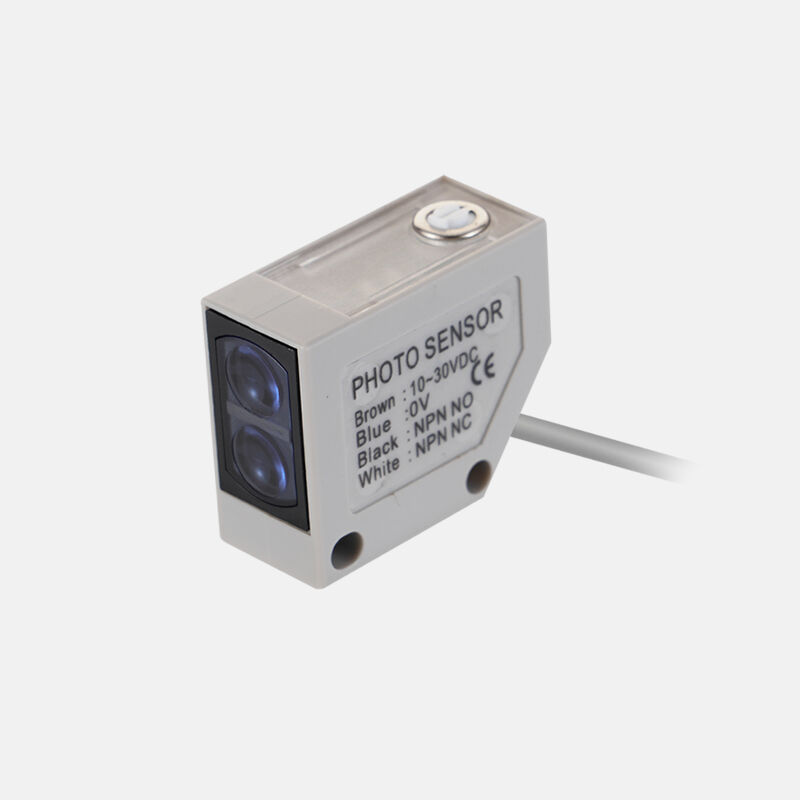
In modern industrial environments where speed and precision define competitive advantage, the choice of sensing technology can make or break an automation system. A photoelectric sensor switch has emerged as one of the most reliable and versatile tools available to engineers and automation designers who need fast, accurate, and non-contact object detection. Whether you are managing high-speed conveyor lines, packaging operations, or precision assembly processes, understanding why this technology is the preferred choice for fast automation is essential to making informed equipment decisions.
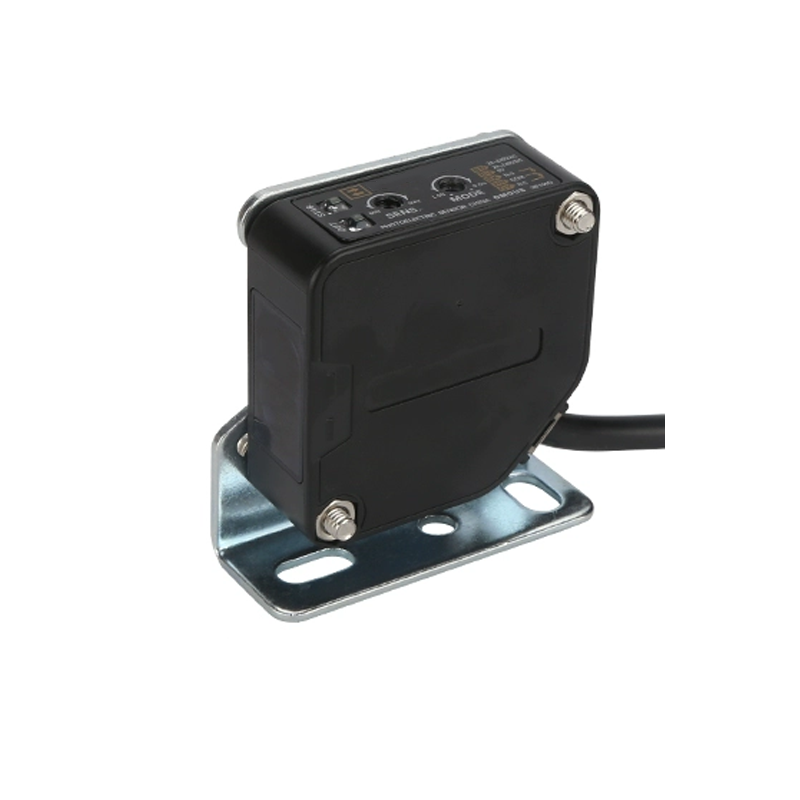
The photoelectric sensor switch operates by emitting a beam of light — typically infrared, visible red, or laser — and detecting changes in that beam caused by the presence, absence, or surface characteristics of a target object. This light-based detection principle allows the sensor to respond in microseconds, making it exceptionally well-suited for applications where production lines run at high cycle rates and where even a millisecond of delay can result in misalignment, product damage, or system faults. As automation demands continue to intensify across industries, the photoelectric sensor switch stands out as a technology that directly supports faster throughput without sacrificing accuracy.
The Speed Advantage of a Photoelectric Sensor Switch in Automation
Response Time That Matches High-Speed Production
One of the primary reasons engineers choose a photoelectric sensor switch for fast automation is its exceptional response time. Unlike mechanical switches that rely on physical contact and moving parts, a photoelectric sensor switch detects objects through light interaction, which means the signal is generated almost instantaneously upon detection. Response times in the range of one to five milliseconds are common in industrial-grade models, and some high-performance variants achieve sub-millisecond switching speeds.
This speed is critical in applications such as bottling lines, electronic component placement, and label verification systems, where objects pass the sensor at rates of hundreds or even thousands of units per minute. A photoelectric sensor switch that cannot keep pace with the line speed will generate missed detections or false triggers, both of which disrupt production flow and reduce overall equipment effectiveness. Choosing a sensor with the right response time specification is therefore a foundational decision in fast automation design.
Beyond raw switching speed, the photoelectric sensor switch also benefits from the absence of mechanical wear. Because there is no physical contact with the target, the sensor maintains consistent response characteristics over millions of cycles. This stability means that the speed performance you validate during commissioning remains reliable throughout the operational life of the sensor, reducing the need for recalibration or replacement in demanding production environments.
Non-Contact Detection Eliminates Mechanical Delay
Mechanical sensing technologies introduce inherent delays because the actuating element must physically travel to a trigger point before a signal is generated. A photoelectric sensor switch eliminates this delay entirely. The light beam is always active, and detection occurs the moment the target interrupts or reflects that beam. There is no travel distance, no spring return time, and no contact bounce to filter out.
In fast automation, this non-contact characteristic also means the sensor can detect objects that are fragile, lightweight, or moving too quickly to safely contact a mechanical actuator. Thin films, small electronic components, and delicate packaging materials can all be detected reliably by a photoelectric sensor switch without any risk of physical damage. This expands the range of applications where high-speed sensing is feasible and safe.
Detection Range and Flexibility That Support Diverse Automation Layouts
Long-Range Sensing Without Sacrificing Accuracy
A photoelectric sensor switch offers detection ranges that far exceed those of inductive or capacitive proximity sensors. Depending on the operating mode and optical configuration, a photoelectric sensor switch can reliably detect objects at distances ranging from a few millimeters to several meters. This flexibility allows automation designers to position sensors at convenient mounting locations without being constrained by short detection distances.
In through-beam configurations, where the emitter and receiver are mounted on opposite sides of the detection zone, sensing distances of ten meters or more are achievable. Retroreflective models, which use a reflector to return the beam to a combined emitter-receiver unit, typically offer ranges up to several meters. Diffuse-mode photoelectric sensor switch models, which detect the light reflected directly from the target surface, are optimized for shorter ranges but offer the simplest installation since only one device needs to be mounted.
This range versatility means that a single photoelectric sensor switch platform can serve multiple stations within the same production line, reducing the number of sensor families that maintenance teams need to stock and understand. Standardization around one sensing technology simplifies spare parts management and accelerates troubleshooting when issues arise.
Adaptability Across Object Types and Surface Conditions
Fast automation lines rarely handle just one type of product. A photoelectric sensor switch is designed to detect a wide variety of object types, including opaque, translucent, shiny, matte, dark, and light-colored surfaces. By selecting the appropriate operating mode and light source, engineers can configure the sensor to perform reliably regardless of the target's material or finish.
For highly reflective targets, polarized retroreflective photoelectric sensor switch models use polarization filters to distinguish between the reflector's return signal and unwanted reflections from the target surface. For transparent objects such as glass bottles or plastic films, through-beam or specialized background suppression models provide reliable detection where other sensor types would struggle. This adaptability is a key reason why the photoelectric sensor switch is the default choice in fast, mixed-product automation environments.
The ability to handle diverse targets without changing the sensor hardware also reduces downtime during product changeovers. In many cases, a simple sensitivity adjustment or teach-in procedure is sufficient to reconfigure a photoelectric sensor switch for a new product variant, keeping changeover times short and production efficiency high.
Integration Simplicity and Compatibility With Modern Automation Systems
Standard Output Signals for Seamless PLC Integration
A photoelectric sensor switch is designed from the ground up for integration into programmable logic controller-based automation systems. Most industrial models provide NPN or PNP transistor outputs, which connect directly to standard digital input modules on any major PLC platform. This plug-and-play compatibility means that adding a photoelectric sensor switch to an existing automation system requires minimal wiring effort and no special interface hardware.
Many modern photoelectric sensor switch models also support IO-Link, a standardized point-to-point communication protocol that enables bidirectional data exchange between the sensor and the control system. Through IO-Link, engineers can remotely read diagnostic data, adjust sensitivity settings, and monitor signal quality without physically accessing the sensor. This capability is particularly valuable in fast automation environments where sensors are mounted in difficult-to-reach locations or where production schedules leave little time for manual adjustments.
The combination of standard digital outputs and optional IO-Link connectivity makes the photoelectric sensor switch a future-ready component that fits naturally into both conventional and Industry 4.0-oriented automation architectures. As factories move toward greater connectivity and data-driven maintenance strategies, sensors that support intelligent communication protocols become increasingly important assets.
Compact Form Factors for Tight Installation Spaces
Modern automation machinery is often designed with minimal clearances between components, leaving little room for bulky sensing devices. The photoelectric sensor switch is available in a wide range of compact form factors, including cylindrical barrel housings, flat rectangular blocks, and miniature slot-type configurations. This variety ensures that a suitable photoelectric sensor switch can be found for virtually any installation geometry.
Compact photoelectric sensor switch models with integrated amplifiers are particularly useful in space-constrained applications because they eliminate the need for a separate amplifier unit. The entire sensing and signal processing function is contained within a single housing, simplifying installation and reducing the overall footprint of the sensing system. For high-density machine designs where every millimeter of space matters, this integration is a significant practical advantage.
Reliability and Durability in Demanding Industrial Conditions
Robust Construction for Harsh Environments
Fast automation environments are often physically demanding. Vibration, temperature extremes, moisture, dust, and chemical exposure are common challenges that sensing components must withstand. A well-specified photoelectric sensor switch is built to handle these conditions, with housing materials and sealing standards selected to match the application environment.
Industrial photoelectric sensor switch models typically carry IP67 or IP68 ingress protection ratings, meaning they are fully protected against dust and capable of withstanding immersion in water. Stainless steel housing variants are available for food processing and washdown applications where the sensor must survive repeated high-pressure cleaning cycles. This level of environmental protection ensures that the photoelectric sensor switch continues to perform reliably even as surrounding conditions fluctuate.
Vibration resistance is another important durability characteristic. In applications where the sensor is mounted on moving machinery or near high-frequency vibration sources, a photoelectric sensor switch with a solid-state design and secure mounting provisions will maintain its alignment and signal integrity far better than a mechanically actuated alternative. The absence of moving parts within the sensor itself is a fundamental reliability advantage in these conditions.
Long Service Life Reduces Maintenance Burden
The total cost of ownership for any automation component includes not just the purchase price but also the cost of maintenance, replacement, and associated downtime. A photoelectric sensor switch, with its non-contact operating principle and solid-state construction, typically offers a service life measured in tens of millions of switching cycles. This longevity translates directly into lower maintenance frequency and fewer unplanned stoppages.
In high-speed automation where a single sensor may execute millions of detection cycles per day, the durability of the photoelectric sensor switch becomes a significant operational advantage. Maintenance teams can focus their attention on other system components rather than routinely replacing worn sensing devices. When combined with IO-Link-enabled predictive diagnostics, the photoelectric sensor switch can even signal when its performance is beginning to degrade, allowing maintenance to be scheduled proactively rather than reactively.
Economic and Operational Value in Fast Automation Projects
Productivity Gains From Consistent High-Speed Detection
The business case for choosing a photoelectric sensor switch in fast automation ultimately rests on the productivity gains it enables. When detection is fast, accurate, and consistent, the automation system can operate at its designed throughput rate without the speed reductions or safety margins that less capable sensors would require. Every percentage point of additional throughput translates into measurable revenue impact over the course of a production year.
A photoelectric sensor switch also contributes to quality outcomes by enabling precise position verification, presence confirmation, and reject detection at line speed. Products that fail to meet position or presence criteria can be identified and diverted before they reach downstream processes, reducing rework costs and protecting the integrity of the production output. This quality contribution is often as valuable as the speed contribution in justifying the investment in high-performance sensing technology.
Scalability Across Automation Expansion Projects
As production volumes grow and automation systems are expanded, the photoelectric sensor switch scales naturally with the project. Additional sensing points can be added using the same sensor family, the same wiring standards, and the same configuration tools already in use. This scalability reduces the engineering effort required for expansion projects and ensures that new sensing installations are consistent with the existing system architecture.
The wide availability of photoelectric sensor switch models across different detection ranges, output types, and housing formats means that a single supplier relationship can cover the sensing needs of an entire facility. This consolidation simplifies procurement, reduces inventory complexity, and strengthens the technical support relationship with the sensor supplier. For automation managers responsible for multiple production lines or facilities, this operational simplicity has real and tangible value.
FAQ
What makes a photoelectric sensor switch faster than other sensor types?
A photoelectric sensor switch detects objects through light, which travels and responds at speeds that far exceed mechanical or even magnetic sensing principles. The absence of moving parts and physical contact means the signal is generated almost instantly upon detection, with response times typically in the one to five millisecond range. This makes the photoelectric sensor switch significantly faster than mechanical limit switches and comparable to or faster than inductive proximity sensors in most industrial applications.
Can a photoelectric sensor switch detect transparent or shiny objects reliably?
Yes, with the correct operating mode selected. Transparent objects are best detected using through-beam photoelectric sensor switch configurations, where the interruption of a direct beam between emitter and receiver provides a clear signal regardless of the target's transparency. Shiny or highly reflective surfaces are handled using polarized retroreflective models that filter out unwanted reflections. Choosing the right mode for the target type is the key to reliable detection in these challenging cases.
How does a photoelectric sensor switch integrate with a PLC-based automation system?
Most industrial photoelectric sensor switch models provide NPN or PNP transistor outputs that connect directly to standard digital input cards on any major PLC platform. Wiring is straightforward and requires no special interface hardware. Models with IO-Link capability offer additional integration depth, allowing the PLC or a connected IO-Link master to read diagnostic data and adjust sensor parameters remotely, which is particularly useful in fast automation environments where physical access to the sensor may be limited.
What environmental conditions can a photoelectric sensor switch withstand?
Industrial-grade photoelectric sensor switch models are designed to operate reliably in demanding conditions including dust, moisture, vibration, and temperature extremes. IP67 and IP68 ratings are standard on many models, providing full dust protection and resistance to water immersion. Stainless steel housing options are available for washdown and food processing environments. The solid-state construction of a photoelectric sensor switch, with no moving internal parts, also provides inherent resistance to vibration and mechanical shock that would degrade contact-based sensing devices over time.
Table of Contents
- The Speed Advantage of a Photoelectric Sensor Switch in Automation
- Detection Range and Flexibility That Support Diverse Automation Layouts
- Integration Simplicity and Compatibility With Modern Automation Systems
- Reliability and Durability in Demanding Industrial Conditions
- Economic and Operational Value in Fast Automation Projects
-
FAQ
- What makes a photoelectric sensor switch faster than other sensor types?
- Can a photoelectric sensor switch detect transparent or shiny objects reliably?
- How does a photoelectric sensor switch integrate with a PLC-based automation system?
- What environmental conditions can a photoelectric sensor switch withstand?