 EN
EN

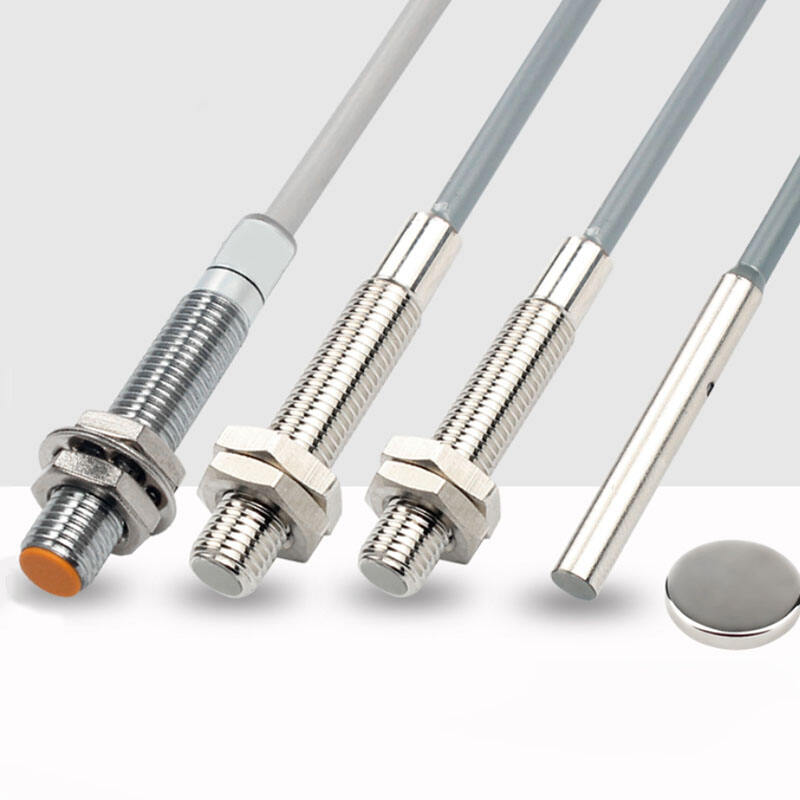
In modern industrial automation, the reflective sensor has become one of the most widely adopted detection technologies across manufacturing, packaging, logistics, and process control. Understanding what makes a reflective sensor so valuable helps engineers, procurement specialists, and system integrators make smarter design decisions. This article breaks down the core benefits of reflective sensor technology and explains why it continues to outperform many conventional detection methods in real-world industrial environments.
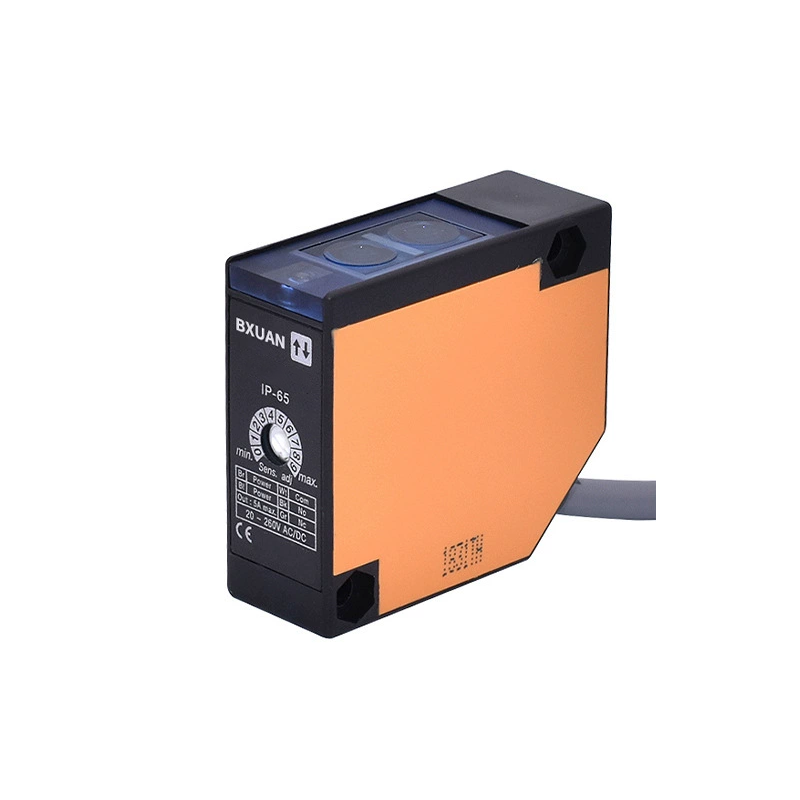
A reflective sensor operates by emitting a light beam, typically infrared, and detecting the light reflected back from a target object. Unlike through-beam or retroreflective configurations, a reflective sensor houses both the emitter and receiver in a single unit, which simplifies installation and reduces wiring complexity significantly. This built-in design efficiency is just one reason the reflective sensor is favored in space-constrained and high-throughput environments. As we explore the key benefits in detail, it becomes clear why the reflective sensor is a foundational component in intelligent sensing systems today.
Simplified Installation and Flexible Mounting
Single-Body Design Advantage
One of the most immediate benefits of a reflective sensor is its single-body form factor. Because the emitter and receiver are integrated into one housing, installing a reflective sensor requires only one mounting bracket, one cable run, and one alignment step. This dramatically reduces installation time compared to through-beam configurations, where two separate units must be precisely aligned across a detection zone. For production lines with tight timelines and limited access space, the reflective sensor offers a clear practical advantage that impacts both labor cost and system reliability.
Versatility Across Mounting Positions
The compact body of a reflective sensor allows it to be mounted in positions that would be impossible or impractical for two-piece sensing systems. A reflective sensor can be placed at the edge of a conveyor, recessed into a machine frame, or positioned at an angle to detect objects on curved surfaces. This positional flexibility allows designers to adapt the reflective sensor into existing machine layouts without major structural changes. The result is faster retrofitting and more agile system upgrades across diverse industrial applications.
High Detection Accuracy and Consistent Performance
Reliable Object Detection Across Conditions
Modern reflective sensor technology delivers highly reliable detection across a wide range of object types, sizes, and surface characteristics. A well-calibrated reflective sensor can detect objects with varying levels of surface reflectivity, including matte, glossy, translucent, and even lightly colored targets. Advanced models incorporate background suppression, which allows a reflective sensor to distinguish between a target object and the background behind it, preventing false triggers caused by environmental reflections. This level of precision makes the reflective sensor a trusted choice in quality control and high-speed sorting applications.
Stable Output in Challenging Environments
Industrial environments often expose sensing components to vibration, dust, temperature changes, and ambient light interference. A quality reflective sensor is engineered to maintain stable detection performance under these conditions. Many reflective sensor models feature sealed enclosures with IP67 or higher ratings, protecting internal optics from contaminants. Additionally, a reflective sensor with modulated light emission reduces susceptibility to ambient light interference, ensuring that the sensor output remains consistent even in brightly lit factory environments or outdoor installations. This robust performance profile extends the service life of the reflective sensor and reduces maintenance demands.
Broad Application Range and System Integration
Cross-Industry Utility
The reflective sensor is deployed across an exceptionally wide range of industries. In packaging lines, a reflective sensor detects product presence and positioning to trigger filling, sealing, or labeling operations. In automotive assembly, a reflective sensor confirms part placement before robotic operations proceed. In food processing, a reflective sensor monitors container fill levels and product flow without contact, preserving hygiene standards. In electronics manufacturing, a reflective sensor identifies small components on PCB assembly lines where precision and speed are both critical. This cross-industry adaptability demonstrates that the reflective sensor is not a niche tool but a universally applicable sensing platform.
Seamless Integration with Automation Controllers
A reflective sensor typically outputs standard NPN or PNP switching signals, making it directly compatible with PLCs, HMIs, motion controllers, and other industrial automation hardware. Some advanced reflective sensor models also support IO-Link communication, enabling real-time diagnostic data, remote parameter adjustment, and predictive maintenance signals to be transmitted alongside switching outputs. This integration capability means a reflective sensor contributes not just to object detection but also to broader smart factory and Industry 4.0 initiatives. When engineers specify a reflective sensor with IO-Link, they gain a device that actively communicates system health, reducing unplanned downtime and improving overall equipment effectiveness.
FAQ
What is the typical detection range of a reflective sensor?
The detection range of a reflective sensor varies by model and application design. Standard diffuse reflective sensor models typically offer detection ranges from a few millimeters up to several hundred millimeters. High-performance reflective sensor variants with background suppression can reliably detect targets at distances up to one meter or more, depending on the target surface and ambient conditions. Always consult the manufacturer datasheet to match the reflective sensor range to your specific application requirements.
Can a reflective sensor detect transparent objects?
Detecting transparent objects is a known challenge for any reflective sensor using standard infrared emission, because transparent materials allow light to pass through rather than reflect it back to the receiver. However, specialized reflective sensor models designed for transparent object detection use polarized light or laser-based emission to identify the minimal reflection from glass or clear plastic surfaces. For applications where transparent target detection is critical, selecting a reflective sensor model specifically rated for that purpose is essential to ensure reliable performance.
How should I select the right reflective sensor for my application?
Selecting the right reflective sensor begins with defining your detection distance, target surface characteristics, environmental conditions, and output signal requirements. A reflective sensor with background suppression is recommended when the target background could interfere with detection. If the application involves wash-down zones or heavy dust, choose a reflective sensor with a high IP protection rating. For smart factory integration, a reflective sensor with IO-Link support adds long-term value. Reviewing detailed technical specifications and consulting with a sensor specialist ensures the chosen reflective sensor will perform reliably throughout the product lifecycle.