 EN
EN

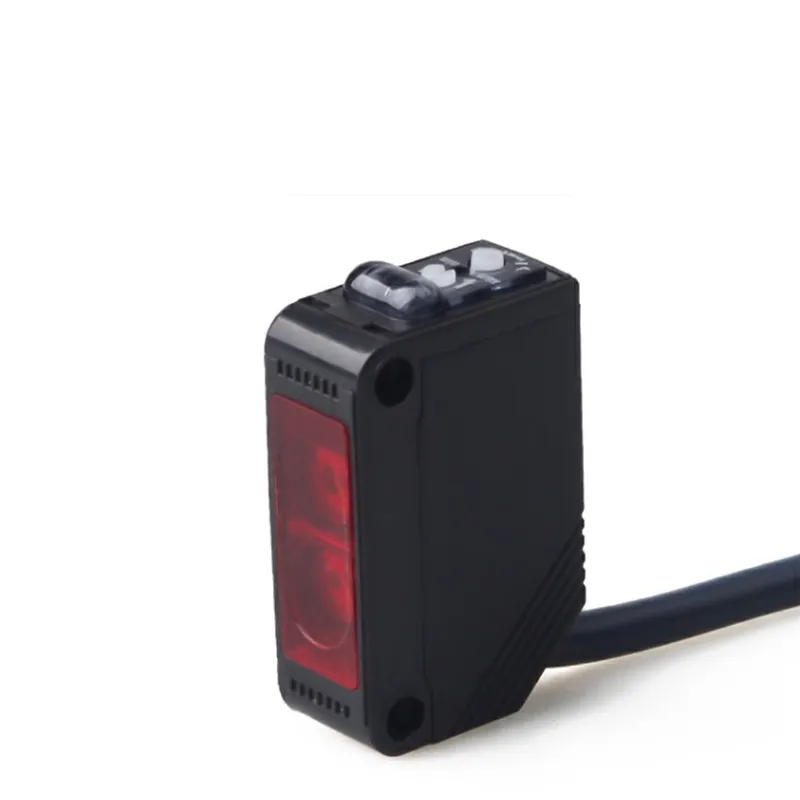
Modern manufacturing and industrial automation systems rely heavily on precise sensing technologies to maintain efficiency, safety, and reliability. Among the most versatile and widely adopted sensing solutions, the photoelectric switch sensor stands as a cornerstone technology that enables automated processes across countless industries. These sophisticated devices use light beams to detect the presence, absence, or position of objects without physical contact, making them indispensable in applications ranging from simple conveyor belt systems to complex robotic assembly lines.
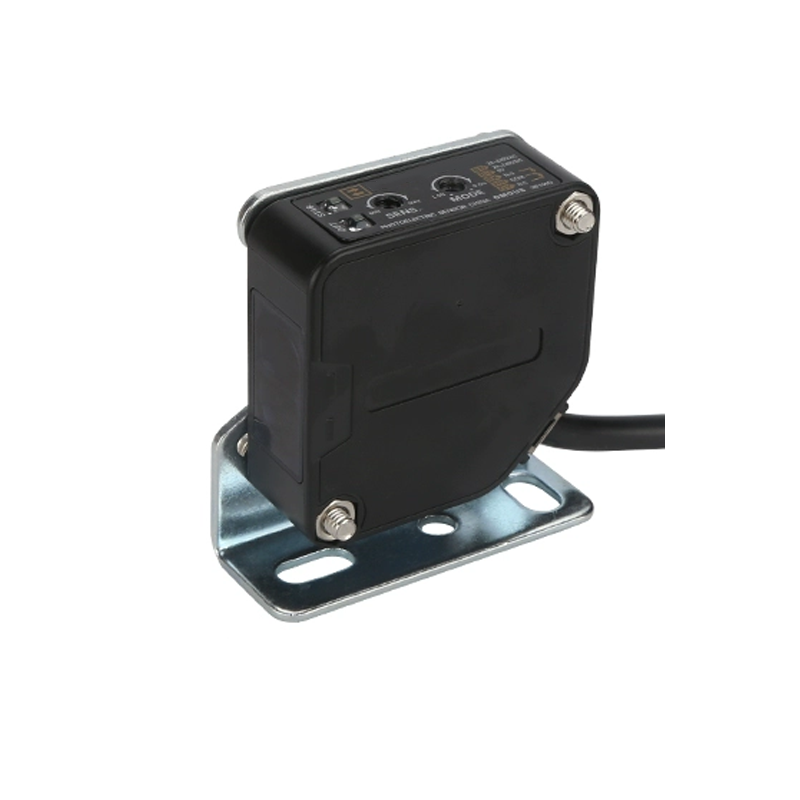
The critical importance of photoelectric switch sensor technology becomes evident when considering the demanding requirements of contemporary automation environments. Unlike mechanical switches that require physical contact and are prone to wear, photoelectric sensors operate through non-contact detection methods, significantly extending their operational lifespan while maintaining consistent performance. This fundamental advantage has positioned photoelectric switch sensor systems as preferred solutions in industries where reliability and precision are paramount, including automotive manufacturing, food processing, pharmaceutical production, and material handling operations.
Understanding the role of photoelectric switch sensor technology in automation requires examining both its technical capabilities and practical applications. These devices represent a convergence of optical engineering, electronic control systems, and industrial design principles, creating sensing solutions that can operate effectively in challenging environments while providing the accuracy and responsiveness demanded by modern automated systems.
Fundamental Operating Principles of Photoelectric Switch Sensors
Light Source and Detection Mechanisms
The core functionality of any photoelectric switch sensor revolves around the emission and detection of light energy, typically using infrared, visible, or laser light sources. The sensor consists of an emitter that projects a focused light beam and a receiver that detects changes in the light signal when objects enter the sensing field. This basic principle enables the photoelectric switch sensor to identify object presence, measure distances, or determine material properties based on how light interacts with target objects.
Advanced photoelectric switch sensor designs incorporate sophisticated optical components including precision lenses, filters, and photodiodes that enhance detection accuracy and reduce environmental interference. The quality of these optical elements directly impacts the sensor's ability to distinguish between target objects and background conditions, making component selection critical for reliable operation in industrial environments.
Modern photoelectric switch sensor systems often feature adjustable sensitivity controls and multiple output options, allowing technicians to optimize performance for specific applications. These customization capabilities ensure that each installation can be fine-tuned to achieve optimal detection performance while minimizing false triggering or missed detections.
Detection Modes and Configurations
Photoelectric switch sensor technology encompasses several distinct detection modes, each designed to address specific sensing requirements. Through-beam sensors utilize separate emitter and receiver units positioned opposite each other, creating an invisible light curtain that triggers when objects interrupt the beam path. This configuration provides the longest sensing ranges and highest accuracy but requires precise alignment between components.
Retro-reflective photoelectric switch sensor designs combine the emitter and receiver in a single housing, using a reflector to bounce the light beam back to the detector. This arrangement simplifies installation while maintaining good sensing range and reliability, making it popular for conveyor applications and automated sorting systems.
Diffuse or proximity mode photoelectric switch sensor units detect light reflected directly from target objects without requiring separate reflectors or receivers. While offering the simplest installation process, these sensors typically have shorter detection ranges and may be more sensitive to object surface characteristics and color variations.
Critical Advantages in Automation Applications
Non-Contact Operation Benefits
The non-contact nature of photoelectric switch sensor operation provides significant advantages over mechanical sensing alternatives in automated systems. Without physical contact requirements, these sensors eliminate wear-related maintenance issues and can operate continuously without degradation from repeated mechanical stress. This characteristic makes photoelectric switch sensor technology particularly valuable in high-speed applications where mechanical sensors would quickly fail due to rapid cycling.
Non-contact detection also enables photoelectric switch sensor systems to work effectively with fragile or easily damaged materials that cannot withstand physical contact during automated handling. Industries processing glass, electronics, food products, or precision components rely on photoelectric sensing to maintain product integrity while ensuring accurate position detection and control.
The absence of physical contact in photoelectric switch sensor operation also prevents contamination issues that could compromise product quality in cleanroom environments or sterile manufacturing processes. This advantage has made photoelectric sensors essential components in pharmaceutical, semiconductor, and food processing applications where maintaining contamination-free conditions is critical.
Speed and Response Time Advantages
Modern photoelectric switch sensor designs achieve response times measured in microseconds, enabling detection and control of high-speed automated processes that exceed the capabilities of mechanical sensing systems. This rapid response capability allows photoelectric sensors to accurately track and control fast-moving objects on production lines, robotic systems, and automated material handling equipment.
The electronic switching nature of photoelectric switch sensor operation eliminates the mechanical delays inherent in contact-based sensors, providing consistent timing performance regardless of operating conditions. This predictable response characteristic enables precise synchronization of automated processes and improves overall system efficiency and product quality.
High-frequency switching capabilities of photoelectric switch sensor systems support advanced automation techniques including rapid positioning control, high-speed counting applications, and precise timing functions that form the foundation of modern automated manufacturing processes.
Environmental Resilience and Reliability
Operating Condition Tolerance
Industrial photoelectric switch sensor designs incorporate robust housings and environmental protection features that enable reliable operation in challenging conditions including temperature extremes, humidity variations, and exposure to dust, moisture, and chemical contaminants. These environmental tolerances make photoelectric sensors suitable for outdoor applications, harsh manufacturing environments, and specialized industrial processes.
Advanced photoelectric switch sensor models feature sealed optical windows, corrosion-resistant materials, and temperature-compensated electronics that maintain performance consistency across wide operating ranges. This environmental resilience reduces maintenance requirements and extends sensor lifespan in demanding applications.
Protection against electromagnetic interference and electrical noise ensures that photoelectric switch sensor systems maintain accurate operation in electrically noisy industrial environments where motors, welders, and other high-power equipment could disrupt sensitive electronic sensors.
Long-Term Performance Stability
The solid-state electronic design of photoelectric switch sensor systems provides exceptional long-term stability with minimal performance drift over extended operating periods. Unlike mechanical sensors that experience gradual wear and calibration changes, photoelectric sensors maintain consistent detection thresholds and response characteristics throughout their operational life.
Predictable performance degradation patterns in photoelectric switch sensor technology enable condition-based maintenance strategies that reduce unexpected failures and optimize replacement scheduling. Many modern sensors incorporate self-diagnostic features that monitor internal component health and provide advance warning of potential issues.
The absence of moving parts in photoelectric switch sensor designs eliminates common failure modes associated with mechanical wear, spring fatigue, and contact corrosion, resulting in significantly improved mean time between failures compared to traditional sensing technologies.
Integration Capabilities with Automation Systems
Interface and Communication Options
Contemporary photoelectric switch sensor designs offer multiple output configurations and communication interfaces that facilitate seamless integration with various automation control systems. Standard output options include discrete switching signals, analog outputs for distance measurement, and digital communication protocols that enable advanced diagnostic and configuration capabilities.
Industrial networking capabilities allow photoelectric switch sensor systems to participate in distributed control architectures, providing real-time status information and enabling remote configuration changes without physical access to individual sensors. This connectivity supports predictive maintenance programs and system optimization initiatives.
Programmable logic integration features in advanced photoelectric switch sensor models enable complex detection logic, multi-point sensing coordination, and adaptive threshold adjustments that enhance overall automation system intelligence and flexibility.
Scalability and System Expansion
The modular nature of photoelectric switch sensor installations supports incremental system expansion and reconfiguration as automation requirements evolve. Standardized mounting interfaces, cable connections, and signal formats enable rapid deployment of additional sensing points without major system modifications.
Network-based photoelectric switch sensor architectures support large-scale installations with hundreds of sensing points managed through centralized control interfaces. This scalability makes photoelectric sensing practical for complex automated facilities including warehouse management systems, automotive assembly lines, and continuous manufacturing processes.
Compatibility with existing automation infrastructure allows photoelectric switch sensor upgrades to enhance system capabilities without requiring complete control system replacements, protecting previous technology investments while improving performance.
Application-Specific Advantages
Manufacturing and Assembly Operations
In manufacturing environments, photoelectric switch sensor technology enables precise part positioning, quality verification, and process monitoring that directly impacts production efficiency and product quality. These sensors can detect subtle variations in part dimensions, surface characteristics, and assembly completeness that might be missed by other sensing methods.
Automated assembly lines utilize photoelectric switch sensor arrays to guide robotic systems, verify component presence, and ensure proper assembly sequences. The high accuracy and repeatability of photoelectric detection enables tight manufacturing tolerances and consistent product quality across high-volume production runs.
Quality control applications benefit from the ability of photoelectric switch sensor systems to detect color variations, surface defects, and dimensional irregularities that indicate manufacturing problems requiring immediate attention or process adjustments.
Material Handling and Logistics
Warehouse automation and material handling systems depend on photoelectric switch sensor technology for accurate package detection, sorting control, and inventory tracking. These sensors enable high-speed sorting operations that maximize throughput while minimizing handling errors and damage.
Conveyor control systems utilize photoelectric switch sensor feedback to optimize belt speeds, prevent collisions, and ensure proper spacing between transported items. This control capability reduces energy consumption while maximizing system capacity and reliability.
Automated storage and retrieval systems rely on photoelectric switch sensor positioning feedback to accurately place and retrieve items from storage locations, enabling efficient space utilization and rapid order fulfillment in modern distribution centers.
FAQ
What makes photoelectric switch sensors more reliable than mechanical switches in automation
Photoelectric switch sensors offer superior reliability because they operate without physical contact, eliminating wear-related failures common in mechanical switches. They maintain consistent performance over millions of operations, resist environmental contamination, and provide faster response times essential for high-speed automation applications.
How do photoelectric switch sensors handle different object materials and colors
Modern photoelectric switch sensors incorporate advanced optical designs and signal processing algorithms that compensate for varying object characteristics. Adjustable sensitivity settings, multiple wavelength options, and background suppression features enable reliable detection across different materials, colors, and surface finishes.
What maintenance requirements do photoelectric switch sensors have in industrial environments
Photoelectric switch sensors require minimal maintenance, typically involving periodic cleaning of optical surfaces and verification of detection settings. Their solid-state design eliminates the need for mechanical adjustments, lubrication, or contact replacement that traditional sensors require, significantly reducing maintenance costs and downtime.
Can photoelectric switch sensors integrate with existing automation control systems
Yes, photoelectric switch sensors are designed with standard output interfaces and communication protocols that ensure compatibility with most automation control systems. Many models offer multiple output options and fieldbus connectivity, enabling seamless integration with both legacy systems and modern networked architectures.
Table of Contents
- Fundamental Operating Principles of Photoelectric Switch Sensors
- Critical Advantages in Automation Applications
- Environmental Resilience and Reliability
- Integration Capabilities with Automation Systems
- Application-Specific Advantages
-
FAQ
- What makes photoelectric switch sensors more reliable than mechanical switches in automation
- How do photoelectric switch sensors handle different object materials and colors
- What maintenance requirements do photoelectric switch sensors have in industrial environments
- Can photoelectric switch sensors integrate with existing automation control systems