 EN
EN

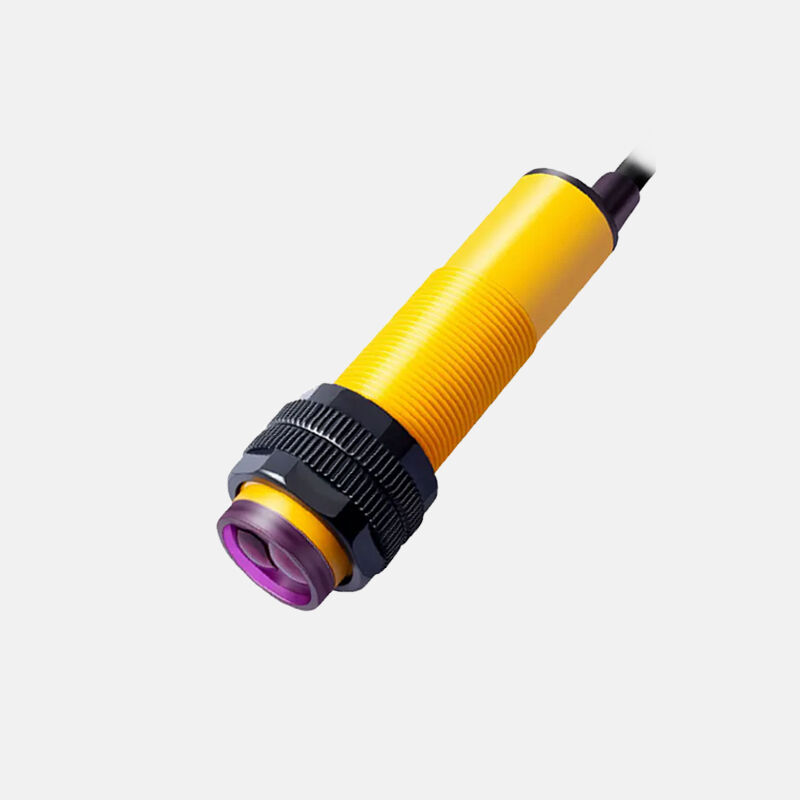
Industrial automation systems require precise and reliable sensing technologies to function effectively in today's competitive manufacturing environment. A distance sensor emerges as a critical component that provides non-contact measurement capabilities essential for modern automated processes. These sophisticated devices enable machinery to detect object presence, measure positioning accuracy, and maintain optimal operational parameters without physical contact, making them indispensable for high-speed production lines and sensitive manufacturing applications.
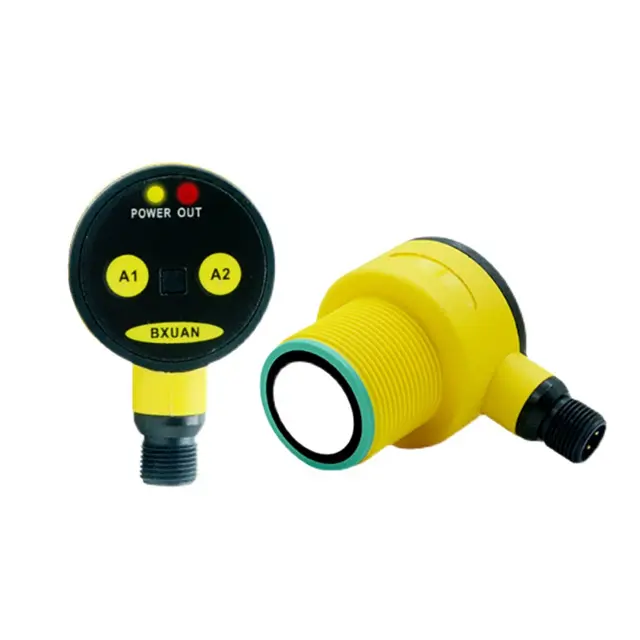
The strategic implementation of distance sensor technology addresses multiple operational challenges that traditional contact-based sensing methods cannot effectively resolve. From preventing costly equipment damage through predictive maintenance to enabling precise material handling in robotic applications, these sensors deliver measurable business value through enhanced operational efficiency. Understanding the compelling reasons to integrate distance sensor solutions into automation systems helps engineers and facility managers make informed decisions that drive productivity improvements and reduce total cost of ownership.
Enhanced Operational Efficiency Through Non-Contact Sensing
Eliminating Mechanical Wear and Maintenance Costs
Distance sensor technology eliminates the inherent limitations of contact-based sensing methods that suffer from mechanical wear over time. Traditional limit switches and proximity sensors require physical contact with moving parts, creating friction points that gradually degrade performance and necessitate frequent replacement cycles. A distance sensor operates through electromagnetic, ultrasonic, or laser-based principles that maintain consistent accuracy without any physical wear components, significantly reducing maintenance intervals and associated downtime costs.
Manufacturing facilities implementing distance sensor arrays typically experience a 40-60% reduction in sensor-related maintenance activities compared to mechanical contact systems. This operational improvement translates directly into increased machine availability and reduced labor costs associated with routine sensor replacement procedures. The non-contact operation also prevents contamination from lubricants, debris, or corrosive substances that frequently compromise traditional sensing elements in industrial environments.
Achieving Superior Response Times and Accuracy
Modern automation systems demand rapid response capabilities to maintain optimal throughput rates, and distance sensor technology delivers millisecond-level detection speeds that mechanical sensors cannot match. Electronic sensing principles enable these devices to process distance measurements and trigger control signals within 1-5 milliseconds, compared to 10-50 milliseconds typical of mechanical switching devices. This performance advantage becomes critical in high-speed packaging, assembly, and material sorting applications where delayed sensing can result in product defects or system jams.
The measurement accuracy provided by advanced distance sensor designs enables precision positioning applications that require repeatability within micrometer tolerances. Laser-based distance sensors achieve measurement resolutions of 0.1mm or better, while ultrasonic variants provide reliable detection within 1-2mm accuracy ranges suitable for most industrial applications. This precision capability supports quality control processes and enables automated systems to maintain tight dimensional specifications without manual calibration adjustments.
Versatile Application Range Across Industrial Sectors
Material Handling and Robotic Integration
Robotic systems rely heavily on distance sensor feedback to navigate complex manufacturing environments and perform precise manipulation tasks. These sensors enable robotic arms to detect object positions, verify part placement accuracy, and avoid collisions with fixtures or other equipment during automated assembly sequences. The real-time distance data allows robots to adjust their movement paths dynamically, accommodating variations in part dimensions or placement positions that would otherwise require manual intervention.
Conveyor belt systems benefit significantly from strategic distance sensor placement for tracking product flow and preventing accumulation bottlenecks. Multiple sensors positioned along transport lines provide continuous monitoring of material movement, enabling predictive control algorithms to optimize belt speeds and prevent product damage from excessive accumulation. This application proves particularly valuable in food processing, pharmaceutical, and electronics manufacturing where product integrity requirements are stringent.
Process Control and Quality Assurance
Manufacturing processes requiring precise material positioning benefit from distance sensor integration for real-time process monitoring and control. Injection molding operations use these sensors to verify mold closure distances and detect part ejection completion, ensuring consistent product dimensions and preventing costly mold damage from incomplete cycles. Similarly, welding automation systems employ distance sensor feedback to maintain optimal torch-to-workpiece distances for consistent weld penetration and quality.
Quality control stations incorporate distance sensor arrays to perform automated dimensional inspections without contact-induced deformation of delicate parts. These non-destructive measurement capabilities enable 100% inspection protocols in industries where product reliability is critical, such as aerospace components, medical device manufacturing, and precision electronics assembly. The sensor data integrates seamlessly with statistical process control systems to identify trending variations before they result in out-of-specification products.
Cost-Effective Implementation and Scalability
Lower Total Cost of Ownership
While distance sensor technology may require higher initial investment compared to basic mechanical switches, the total cost of ownership analysis consistently favors electronic sensing solutions over multi-year operational periods. Reduced maintenance requirements, elimination of mechanical wear parts, and decreased downtime incidents contribute to significant cost savings that typically recover the initial investment within 12-18 months of implementation. Additionally, the extended operational life of distance sensor devices often exceeds 10 years in typical industrial environments.
Energy efficiency considerations also favor distance sensor technology, as modern electronic sensors consume minimal power compared to mechanical systems requiring pneumatic or hydraulic actuation. LED-based optical distance sensors typically consume less than 200mW of power while providing continuous operation, contributing to overall facility energy reduction goals. This efficiency becomes particularly important in battery-powered or energy-conscious applications where power consumption directly impacts operational costs.
Flexible System Integration and Expansion
Distance sensor technology offers exceptional flexibility for system modifications and capacity expansions that mechanical sensing methods cannot accommodate. Standard industrial communication protocols such as 4-20mA analog signals, digital I/O interfaces, and fieldbus connectivity enable seamless integration with existing control systems without requiring specialized interface modules. This compatibility simplifies retrofitting existing automation lines and reduces implementation complexity for new installations.
Modular distance sensor designs support scalable deployment strategies where additional sensing points can be added incrementally as production requirements evolve. The ability to configure measurement ranges, output characteristics, and response timing through software parameters eliminates the need for physical sensor replacements when application requirements change. This adaptability proves especially valuable in flexible manufacturing systems where product changeovers require different sensing configurations.
Environmental Resilience and Reliability Advantages
Superior Performance in Harsh Industrial Conditions
Industrial environments present numerous challenges including temperature extremes, humidity variations, chemical exposure, and electromagnetic interference that can compromise traditional sensing technologies. Distance sensor designs incorporate robust housing materials and advanced signal processing algorithms to maintain accurate operation across wide temperature ranges typically spanning -40°C to +85°C. This environmental tolerance ensures consistent performance in foundries, chemical processing facilities, and outdoor applications where mechanical sensors would fail prematurely.
Vibration immunity represents another critical advantage of distance sensor technology in heavy industrial applications. Electronic sensing principles remain unaffected by mechanical vibrations and shock loads that frequently cause false triggering or calibration drift in mechanical switching devices. This stability proves essential for automation systems installed on mobile equipment, processing machinery with inherent vibration characteristics, or facilities subject to external vibration sources.
Contamination Resistance and Hygiene Compliance
Food processing and pharmaceutical manufacturing require sensing solutions that comply with strict hygiene standards while resisting contamination from cleaning chemicals and sterilization procedures. Distance sensor technology eliminates the crevices and mechanical interfaces present in traditional sensors where bacteria and contaminants can accumulate. Smooth, sealed housings with IP67 or IP69K protection ratings enable thorough washdown procedures without compromising sensor functionality or measurement accuracy.
Chemical resistance capabilities built into distance sensor designs prevent degradation from exposure to aggressive cleaning agents, lubricants, and process chemicals commonly encountered in industrial applications. Stainless steel housings and chemically inert sensing elements maintain long-term reliability in applications where mechanical sensors would require frequent replacement due to chemical attack or corrosion damage.
Advanced Features and Future-Ready Technology
Smart Diagnostics and Predictive Maintenance
Modern distance sensor platforms incorporate intelligent diagnostic capabilities that monitor sensor health parameters and provide early warning of potential issues before they impact production operations. Built-in self-test functions continuously verify optical cleanliness, signal strength, and measurement consistency, alerting maintenance personnel when cleaning or adjustment is required. These predictive maintenance features reduce unplanned downtime and enable condition-based maintenance scheduling that optimizes resource utilization.
Data logging capabilities integrated into advanced distance sensor designs capture measurement trends and environmental conditions that support root cause analysis when process variations occur. This historical data proves invaluable for optimizing automation system performance and identifying opportunities for further efficiency improvements. The sensor data can also integrate with enterprise maintenance management systems to automate work order generation and parts ordering processes.
Digital Connectivity and Industry 4.0 Integration
The evolution toward Industry 4.0 manufacturing concepts requires sensing technologies that support digital communication protocols and cloud-based data analytics platforms. Distance sensor technology readily adapts to these requirements through Ethernet-based communication interfaces, wireless connectivity options, and standardized data formats that facilitate integration with enterprise information systems. This connectivity enables real-time production monitoring, remote diagnostics, and data-driven optimization strategies.
Machine learning algorithms can process distance sensor data streams to identify subtle patterns and anomalies that human operators might miss, enabling predictive quality control and automated process adjustments. The continuous data availability from distance sensor networks supports artificial intelligence applications that optimize production scheduling, predict maintenance requirements, and improve overall equipment effectiveness metrics.
FAQ
What types of materials can distance sensors detect effectively?
Distance sensors can detect virtually any solid material regardless of color, texture, or composition. Ultrasonic distance sensors work effectively with metals, plastics, wood, glass, liquids, and powdered materials. Laser-based sensors perform well with opaque materials and most translucent substances, while infrared sensors handle a wide range of solid objects. The key consideration is selecting the appropriate sensing technology based on the target material properties and environmental conditions rather than material type limitations.
How do environmental factors affect distance sensor accuracy and reliability?
Modern distance sensors incorporate compensation algorithms and robust designs to minimize environmental impacts on measurement accuracy. Temperature variations are automatically compensated through internal calibration systems, while humidity and air pressure changes have minimal effect on most sensor technologies. Dust and debris can be managed through protective air purging systems or sealed sensor designs, and electromagnetic interference is prevented through proper shielding and filtering. Proper sensor selection and installation practices ensure reliable operation across typical industrial environmental ranges.
Can distance sensors be integrated with existing automation control systems?
Distance sensors offer excellent compatibility with existing automation infrastructure through standard industrial communication protocols including 4-20mA analog signals, discrete digital outputs, Modbus, Profibus, and Ethernet-based networks. Most sensors provide configurable output formats and scaling options that match existing control system input requirements. Integration typically requires minimal hardware modifications and can often be accomplished through software configuration changes in the control system programming.
What maintenance requirements do distance sensors have compared to mechanical sensors?
Distance sensors require significantly less maintenance than mechanical sensors due to their non-contact operation and lack of moving parts. Routine maintenance primarily involves periodic cleaning of optical surfaces for laser and infrared sensors, or acoustic port cleaning for ultrasonic types. Mechanical sensors require regular lubrication, adjustment, and replacement of worn contact elements. Overall maintenance frequency for distance sensors is typically 75-90% lower than comparable mechanical sensing solutions, resulting in substantial labor cost savings and improved system availability.
Table of Contents
- Enhanced Operational Efficiency Through Non-Contact Sensing
- Versatile Application Range Across Industrial Sectors
- Cost-Effective Implementation and Scalability
- Environmental Resilience and Reliability Advantages
- Advanced Features and Future-Ready Technology
-
FAQ
- What types of materials can distance sensors detect effectively?
- How do environmental factors affect distance sensor accuracy and reliability?
- Can distance sensors be integrated with existing automation control systems?
- What maintenance requirements do distance sensors have compared to mechanical sensors?