 EN
EN

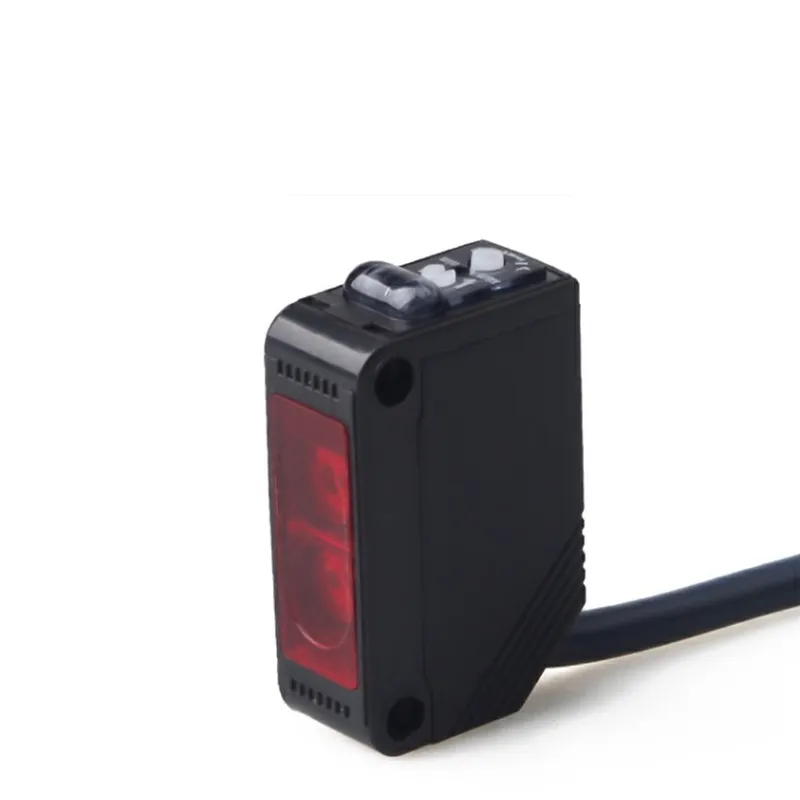
Industrial automation systems rely heavily on precise detection and measurement capabilities to maintain operational efficiency and safety standards. Among the various sensing technologies available, optical sensors have emerged as a cornerstone solution for countless industrial applications. These sophisticated devices utilize light-based detection principles to provide accurate, reliable, and non-contact sensing capabilities that meet the demanding requirements of modern manufacturing environments. Understanding what makes an optical sensor truly ideal for industrial use requires examining the fundamental characteristics, advanced features, and real-world performance benefits that distinguish superior sensing solutions from basic alternatives.
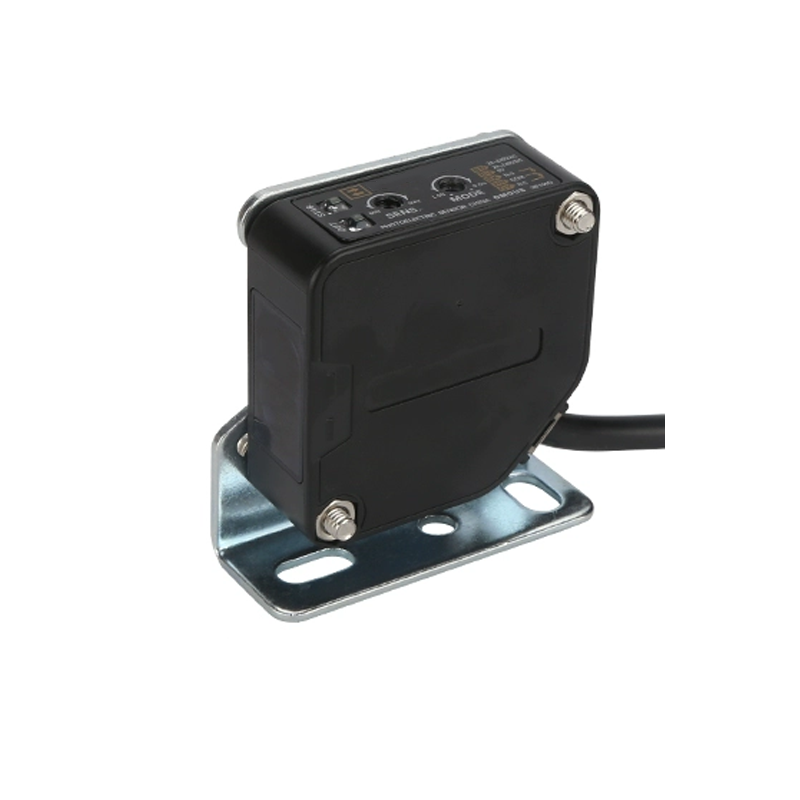
Fundamental Operating Principles of Industrial Optical Sensors
Light Emission and Detection Technology
The core functionality of an optical sensor revolves around the controlled emission and detection of light signals to determine the presence, absence, or characteristics of target objects. Industrial-grade optical sensors typically employ LED or laser light sources that emit consistent, focused beams across specific wavelengths optimized for various detection scenarios. The emitted light interacts with target objects through reflection, transmission, or interruption, creating measurable changes in the received light signal that the sensor's photodetector converts into electrical outputs. This fundamental principle enables non-contact detection capabilities that eliminate mechanical wear and provide exceptional longevity in demanding industrial environments.
Modern optical sensors incorporate sophisticated signal processing algorithms that analyze light intensity variations, wavelength shifts, and timing characteristics to deliver precise detection results. Advanced models feature adjustable sensitivity settings, background suppression capabilities, and multi-point sensing configurations that enhance detection accuracy while minimizing false triggering from environmental interference. The integration of digital signal processing technology allows these sensors to distinguish between target objects and background elements, ensuring reliable operation even in challenging conditions with varying lighting, dust, or vibration levels.
Sensing Range and Detection Capabilities
Industrial optical sensors offer versatile detection ranges spanning from millimeters to several meters, depending on the specific application requirements and sensor configuration. Short-range sensors excel in precise positioning applications, component verification, and quality control processes where millimeter-level accuracy is essential. Medium-range optical sensors provide reliable detection for conveyor systems, automated sorting, and general presence sensing applications across distances typically ranging from several centimeters to multiple meters. Long-range optical sensors deliver exceptional performance for large-scale industrial operations, perimeter monitoring, and high-speed production line applications where extended detection distances are critical.
The detection capabilities of industrial optical sensors extend beyond simple presence sensing to include distance measurement, object counting, color recognition, and dimensional analysis. Triangulation-based optical sensors provide precise distance measurements for automated positioning systems and robotic applications. Time-of-flight optical sensors offer rapid distance calculations suitable for high-speed manufacturing processes and dynamic object tracking. Spectroscopic optical sensors enable material identification and quality assessment applications that require detailed analysis of object characteristics based on their optical properties.
Environmental Resilience and Durability Features
Protection Against Industrial Contaminants
Industrial environments present numerous challenges that can compromise sensor performance, including dust accumulation, chemical exposure, moisture infiltration, and temperature fluctuations. High-quality optical sensors incorporate robust housing designs with appropriate IP ratings that provide comprehensive protection against these environmental hazards. IP67 and IP69K rated optical sensors offer exceptional resistance to water ingress, dust penetration, and chemical contamination, ensuring reliable operation in food processing, pharmaceutical manufacturing, and outdoor industrial applications where washing and sanitization procedures are routine.
Advanced optical sensor designs feature self-cleaning capabilities and contamination compensation algorithms that maintain detection accuracy even when lens surfaces accumulate dust or other particles. Some models incorporate heating elements or air purge systems that prevent condensation formation and remove surface contaminants automatically. These protective features significantly reduce maintenance requirements while ensuring consistent performance throughout extended operational periods, making the optical sensor ideal for continuous industrial operations.
Temperature Stability and Thermal Management
Industrial optical sensors must maintain accurate detection performance across wide temperature ranges that commonly span from -40°C to +70°C or beyond in specialized applications. Temperature variations affect both the light source characteristics and photodetector sensitivity, potentially causing detection threshold drift or signal instability. Premium optical sensors incorporate temperature compensation circuits that automatically adjust detection parameters to maintain consistent performance regardless of ambient temperature fluctuations. This thermal stability ensures reliable operation in applications ranging from cold storage facilities to high-temperature manufacturing processes.
Effective thermal management extends beyond temperature compensation to include heat dissipation strategies that prevent internal component damage from prolonged exposure to elevated temperatures. Advanced optical sensors feature aluminum housings with integrated heat sinks, thermal isolation barriers between critical components, and strategic ventilation designs that promote efficient heat transfer. These thermal management features enable optical sensors to operate reliably in demanding applications such as steel production, glass manufacturing, and automotive assembly where ambient temperatures regularly exceed standard operating ranges.
Signal Processing and Response Characteristics
High-Speed Detection and Processing
Modern industrial applications demand optical sensors with rapid response times capable of detecting fast-moving objects and providing immediate signal output for real-time process control. High-performance optical sensors achieve response times measured in microseconds, enabling detection of objects traveling at speeds exceeding several meters per second without compromising accuracy. This rapid detection capability proves essential for high-speed packaging lines, automated sorting systems, and robotic assembly applications where split-second timing determines operational efficiency and product quality.
Advanced signal processing algorithms enhance detection speed while maintaining exceptional accuracy through sophisticated filtering techniques that eliminate noise and false signals. Digital signal processors analyze multiple data points simultaneously, applying statistical analysis and pattern recognition to distinguish genuine detection events from environmental interference. These processing capabilities enable optical sensors to maintain high detection accuracy even in applications with rapid signal variations, electromagnetic interference, or mechanical vibrations that could compromise less sophisticated sensing systems.
Output Signal Flexibility and Integration
Industrial optical sensors provide versatile output signal options that facilitate seamless integration with diverse control systems, PLCs, and automation networks. Standard output configurations include discrete switching outputs for simple presence detection, analog voltage or current signals for distance measurement applications, and digital communication protocols for advanced data exchange requirements. Configurable output parameters allow engineers to customize signal characteristics, including switching thresholds, hysteresis settings, and timing delays to match specific application requirements and system interfaces.
Advanced optical sensors support industrial communication protocols such as IO-Link, Ethernet/IP, and Profibus that enable comprehensive sensor diagnostics, remote configuration, and predictive maintenance capabilities. These communication features provide valuable insights into sensor performance, detection statistics, and potential maintenance requirements that enhance overall system reliability and operational efficiency. The ability to remotely monitor and configure optical sensors reduces installation time, simplifies system commissioning, and enables proactive maintenance strategies that minimize unexpected downtime.
Application-Specific Design Considerations
Mounting and Installation Flexibility
Industrial optical sensors require versatile mounting options that accommodate diverse installation requirements while maintaining optimal detection performance. Adjustable mounting brackets, swivel joints, and multi-directional positioning capabilities enable precise sensor alignment and beam orientation for complex detection scenarios. Threaded barrel designs, mounting slots, and standardized brackets provide compatibility with existing industrial hardware and simplify retrofit installations in established automation systems.
Compact optical sensor designs maximize installation flexibility in space-constrained applications while maintaining full functionality and performance characteristics. Miniaturized sensors enable integration into tight spaces, robotic end effectors, and portable equipment where size limitations prohibit larger sensing solutions. Modular sensor designs allow separation of sensing heads from control electronics, providing installation flexibility for applications requiring remote sensing capabilities or hazardous area installations where electronics must remain in safe zones.
Maintenance and Serviceability Features
Effective maintenance strategies are crucial for maintaining optical sensor performance throughout extended operational periods in industrial environments. Well-designed optical sensors incorporate easily accessible adjustment controls, visual status indicators, and diagnostic capabilities that simplify troubleshooting and performance verification procedures. LED status indicators provide immediate feedback regarding sensor operation, detection status, and potential fault conditions, enabling maintenance personnel to quickly assess sensor health without specialized test equipment.
Modular optical sensor designs facilitate rapid component replacement and minimize downtime during maintenance procedures. Removable sensing heads, replaceable optical elements, and plug-in connection systems enable quick sensor servicing without disrupting entire automation systems. Self-diagnostic capabilities detect potential performance degradation, contamination accumulation, or component wear before failures occur, supporting predictive maintenance strategies that optimize equipment availability and reduce unexpected production interruptions.
Performance Optimization and Calibration
Sensitivity Adjustment and Background Suppression
Optimal optical sensor performance requires precise sensitivity adjustment to match specific detection requirements while minimizing false triggering from background elements or environmental interference. Advanced optical sensors provide multiple sensitivity adjustment methods, including potentiometer controls, push-button teach functions, and digital programming interfaces that enable fine-tuning of detection parameters. Background suppression capabilities allow sensors to ignore reflective surfaces, distant objects, or other elements that might otherwise cause unwanted triggering in complex detection scenarios.
Automatic calibration features simplify sensor setup and ensure consistent performance across varying operating conditions. Self-learning algorithms analyze target characteristics, background conditions, and environmental factors to automatically establish optimal detection parameters without manual intervention. These intelligent calibration capabilities reduce installation time, eliminate guesswork in parameter selection, and ensure reliable detection performance even when target objects or environmental conditions change over time.
Multiple Detection Mode Capabilities
Versatile optical sensors support multiple detection modes that adapt to diverse application requirements without requiring hardware changes or additional sensors. Through-beam mode provides maximum detection range and reliability for applications requiring detection across significant distances or in environments with heavy contamination. Retro-reflective mode offers excellent detection capability with simplified installation requirements using reflector targets instead of separate receiver units. Diffuse reflection mode enables single-unit installation for proximity detection applications where reflector positioning is impractical or impossible.
Advanced optical sensors incorporate intelligent mode selection capabilities that automatically optimize detection parameters based on target characteristics and installation geometry. Adaptive algorithms continuously monitor detection performance and adjust sensitivity, timing, and processing parameters to maintain optimal operation as conditions change. This intelligent adaptation ensures consistent detection reliability while minimizing the need for manual adjustments or recalibration procedures during normal operation.
FAQ
What environmental factors affect optical sensor performance in industrial applications
Industrial optical sensor performance can be influenced by several environmental factors including ambient lighting conditions, dust and contamination levels, temperature fluctuations, humidity variations, and electromagnetic interference. High-quality optical sensors incorporate protective features such as appropriate IP ratings, temperature compensation circuits, and advanced signal processing algorithms to maintain reliable operation despite these challenging conditions. Proper sensor selection based on specific environmental requirements and installation of appropriate protective measures ensures optimal performance in demanding industrial environments.
How do different optical sensor types compare for various industrial detection tasks
Different optical sensor types offer distinct advantages for specific industrial applications. Through-beam sensors provide maximum detection range and reliability for applications requiring detection across significant distances. Retro-reflective sensors offer excellent performance with simplified installation using reflector targets. Diffuse reflection sensors enable single-unit proximity detection for space-constrained installations. Laser-based optical sensors deliver precise detection with narrow beam patterns ideal for small object detection, while LED-based sensors provide cost-effective solutions for general-purpose applications with broader beam characteristics.
What maintenance practices ensure optimal optical sensor performance over time
Regular maintenance practices for industrial optical sensors include periodic cleaning of optical surfaces, verification of detection parameters, inspection of mounting hardware, and monitoring of diagnostic indicators. Cleaning procedures should use appropriate solvents and lint-free materials to avoid scratching optical surfaces. Performance verification involves testing detection consistency with known targets and confirming proper signal output levels. Monitoring diagnostic features and status indicators enables proactive identification of potential issues before they impact system operation, supporting predictive maintenance strategies that maximize sensor reliability and operational efficiency.
How does beam pattern selection impact optical sensor detection accuracy
Beam pattern selection significantly affects optical sensor detection accuracy and reliability in different applications. Narrow laser beams provide precise detection of small objects and enable accurate positioning measurements but may require careful alignment and can be affected by target surface characteristics. Wide LED beams offer more forgiving installation tolerances and reliable detection of larger objects but may have reduced precision for small target detection. Focused beam patterns optimize detection range and minimize background interference, while divergent beams provide broader coverage areas suitable for detecting objects with varying positions or orientations. Proper beam pattern selection based on target size, detection requirements, and installation constraints ensures optimal sensor performance.
Table of Contents
- Fundamental Operating Principles of Industrial Optical Sensors
- Environmental Resilience and Durability Features
- Signal Processing and Response Characteristics
- Application-Specific Design Considerations
- Performance Optimization and Calibration
-
FAQ
- What environmental factors affect optical sensor performance in industrial applications
- How do different optical sensor types compare for various industrial detection tasks
- What maintenance practices ensure optimal optical sensor performance over time
- How does beam pattern selection impact optical sensor detection accuracy