 EN
EN

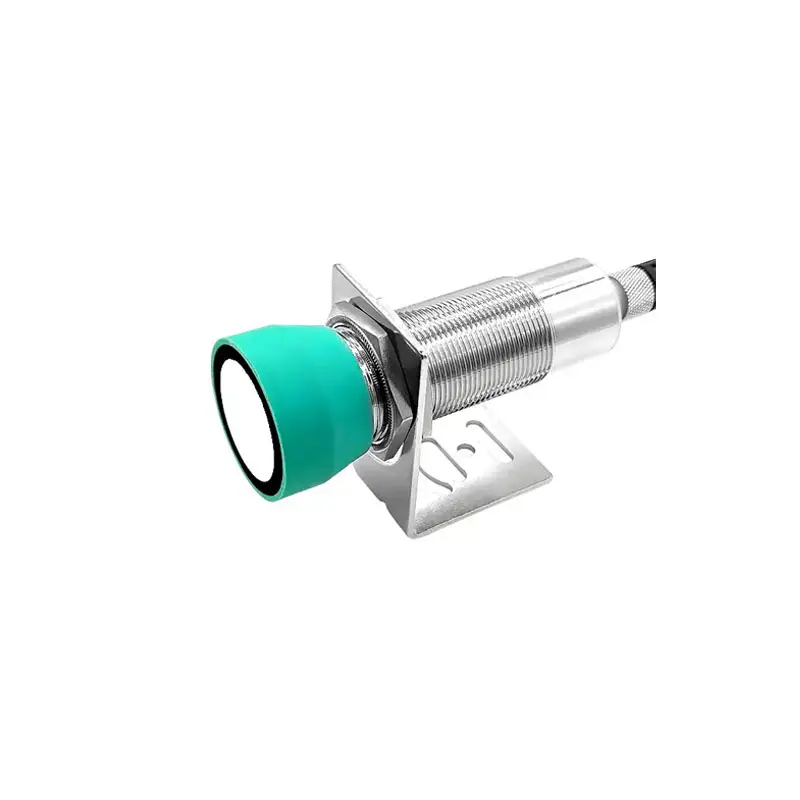
When it comes to reliable, non-contact material detection in industrial environments, the capacitive proximity switch has earned a well-established reputation across a wide range of applications. Unlike technologies that depend on magnetic properties or optical line-of-sight, a capacitive proximity switch responds to changes in the dielectric field surrounding its sensing face, making it uniquely capable of detecting virtually any material — solid, liquid, granular, or powder — regardless of color, surface finish, or transparency. This fundamental characteristic is what sets it apart from other sensing technologies and makes it the preferred choice for engineers and system integrators who need consistent, application-flexible detection.
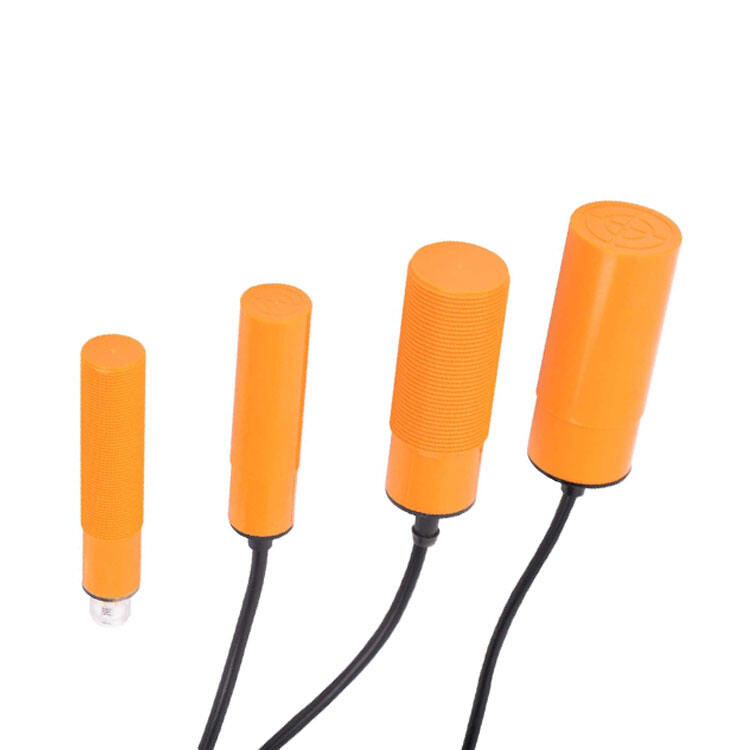
Material detection is one of the most critical functions in automated production lines, packaging systems, food processing equipment, and bulk material handling. Choosing the wrong sensor technology leads to false triggers, missed detections, and costly downtime. The capacitive proximity switch addresses these challenges by offering a sensing principle that is inherently material-agnostic, environmentally adaptable, and mechanically robust. Understanding why this technology is the right choice for material detection requires a closer look at how it works, where it excels, and what operational advantages it delivers in real industrial conditions.
How a Capacitive Proximity Switch Detects Materials
The Electrostatic Field Sensing Principle
A capacitive proximity switch operates by generating an electrostatic field at its sensing face. This field is produced by an internal oscillator circuit connected to two conductive electrodes embedded within the sensor housing. When no target material is present, the field remains in a stable, baseline state and the sensor output remains inactive. The moment a material enters the sensing zone, it alters the capacitance of the field — and the sensor's internal circuitry detects this change and triggers a switching output.
The sensitivity of a capacitive proximity switch can typically be adjusted via a built-in potentiometer or external teach-in function. This allows the sensor to be tuned for specific materials with different dielectric constants, ensuring reliable detection without false positives from background objects or mounting surfaces. The ability to fine-tune sensitivity is a key operational advantage in environments where multiple materials or container types are present on the same line.
Because the detection principle relies on dielectric properties rather than physical contact, reflectivity, or magnetism, a capacitive proximity switch can detect materials through non-metallic container walls such as glass, plastic, or cardboard. This through-wall detection capability is particularly valuable in level sensing, fill detection, and packaging verification applications where direct access to the material is not possible or practical.
Dielectric Constant and Material Range
Every material has a dielectric constant — a measure of how well it stores electrical energy in an electrostatic field. Water has a high dielectric constant, making it very easy for a capacitive proximity switch to detect. Dry powders, granules, and non-conductive solids have lower dielectric constants but are still well within the detection range of a properly configured sensor. Even materials like wood, grain, plastic pellets, and chemical compounds can be reliably detected when the sensor sensitivity is correctly set.
This broad material compatibility is one of the primary reasons engineers choose a capacitive proximity switch over inductive sensors, which are limited to metallic targets, or photoelectric sensors, which require a clear optical path. The capacitive proximity switch fills a detection gap that no other single sensor technology covers as comprehensively, making it an indispensable tool in mixed-material production environments.
Key Reasons to Choose a Capacitive Proximity Switch for Material Detection
Non-Contact Detection Across Material Types
The non-contact nature of a capacitive proximity switch eliminates mechanical wear, contamination risk, and the need for physical interaction with the target material. In food and beverage processing, pharmaceutical manufacturing, and chemical handling, this is not just a convenience — it is a hygiene and safety requirement. A capacitive proximity switch can detect the presence or level of a material without ever touching it, preserving product integrity and reducing maintenance intervals significantly.
For bulk solids detection — such as grain in a silo, plastic pellets in a hopper, or powder in a feed tube — a capacitive proximity switch provides a clean, reliable signal without the bridging, jamming, or calibration drift that mechanical level switches are prone to. The absence of moving parts means the sensor continues to perform consistently over millions of detection cycles without degradation.
Versatility Across Industrial Environments
A capacitive proximity switch is available in a wide range of housing formats — cylindrical, rectangular, and flush-mount — and in protection ratings up to IP67 or higher, making it suitable for wet, dusty, and chemically aggressive environments. Whether installed in a food processing line subject to regular washdowns or in a mining conveyor system exposed to heavy dust and vibration, the capacitive proximity switch can be specified to meet the environmental demands of the application.
The operating temperature range of industrial-grade capacitive proximity switch models typically spans from -25°C to +70°C or beyond, covering the majority of indoor and outdoor industrial applications. Combined with robust stainless steel or reinforced plastic housings, these sensors are engineered to maintain detection accuracy even in conditions that would compromise less rugged sensing technologies.
Reliable Level and Fill Detection
One of the most common and valuable applications of a capacitive proximity switch is liquid level detection. By mounting the sensor on the outside wall of a non-metallic tank or pipe, the sensor can detect whether the liquid inside has reached a specific level — without any penetration of the vessel wall. This is critical in applications involving corrosive liquids, pressurized vessels, or hygienic systems where any wall penetration would introduce contamination or structural risk.
For solid material level detection in bins, hoppers, and silos, the capacitive proximity switch provides a point-level signal that can trigger alarms, activate conveyors, or control filling equipment. The sensor's ability to distinguish between the container wall and the material inside — when sensitivity is correctly adjusted — ensures that only the actual presence of material triggers the output, not the empty container itself.
Comparing Capacitive Detection to Alternative Sensing Technologies
Capacitive vs. Inductive Proximity Sensors
Inductive proximity sensors are excellent for detecting metallic targets at close range, but they are completely blind to non-metallic materials. A capacitive proximity switch, by contrast, detects both metallic and non-metallic targets, making it the more versatile choice when the application involves plastics, liquids, wood, food products, or composite materials. In applications where the target material changes or where the sensor must detect through a non-metallic housing, the capacitive proximity switch is the only practical option.
It is worth noting that in purely metallic target detection applications with no non-metallic interference, an inductive sensor may offer a simpler setup. However, for any application involving material detection in the broader sense — including level, fill, presence, and through-wall detection — the capacitive proximity switch provides a detection capability that inductive technology simply cannot match.
Capacitive vs. Ultrasonic and Optical Sensors
Ultrasonic sensors offer longer detection ranges and are effective for level measurement, but they can be affected by foam, dust, temperature gradients, and turbulent surfaces. Optical sensors require a clear line of sight and can be defeated by transparent materials, steam, or heavy contamination. A capacitive proximity switch is immune to these optical and acoustic interference factors, making it more reliable in environments where foam, vapor, dust, or transparent materials are present.
For close-range material detection — typically within 0 to 25 mm for standard models — the capacitive proximity switch offers a compact, cost-effective, and highly reliable solution that does not require the alignment precision of optical sensors or the acoustic calibration of ultrasonic devices. Its straightforward installation and robust output signal make it a practical first choice for many material detection tasks in automated systems.
Application Scenarios Where a Capacitive Proximity Switch Excels
Food, Beverage, and Pharmaceutical Processing
In food and beverage production, a capacitive proximity switch is widely used to detect liquid levels in tanks, verify the fill level of bottles and cartons, and confirm the presence of ingredients in mixing vessels. Because the sensor can detect through glass, plastic, and stainless steel walls, it integrates cleanly into hygienic production lines without requiring any modification to the vessel or container. This makes the capacitive proximity switch a standard component in filling machines, bottling lines, and ingredient dosing systems.
Pharmaceutical applications demand even higher standards of cleanliness and detection reliability. A capacitive proximity switch used in tablet counting, powder fill verification, or liquid dispensing must deliver consistent, repeatable output without any risk of contamination. The non-contact, sealed-housing design of modern capacitive proximity switch models meets these requirements while also complying with the IP protection and material standards required in regulated manufacturing environments.
Packaging, Logistics, and Bulk Material Handling
In packaging lines, a capacitive proximity switch is used to detect the presence of products inside cartons, verify that bags are properly filled, and confirm that labels or inserts are in place. Because the sensor can detect through cardboard and plastic packaging, it provides a reliable presence signal even when the product inside is not visible from the outside. This capability reduces the need for additional inspection stations and simplifies the overall line design.
In bulk material handling — including grain storage, plastic recycling, and chemical processing — a capacitive proximity switch provides point-level detection in hoppers, bins, and conveyors. The sensor's ability to detect a wide range of bulk materials, combined with its resistance to dust and vibration, makes it a dependable component in high-throughput material handling systems where sensor reliability directly impacts production continuity.
FAQ
Can a capacitive proximity switch detect all types of liquids?
A capacitive proximity switch can detect most liquids, including water, oils, acids, and beverages, because liquids generally have dielectric constants high enough to trigger the sensor's switching output. Very low-dielectric liquids such as certain pure solvents may require a higher-sensitivity sensor or closer mounting distance. In most industrial liquid detection applications, a standard capacitive proximity switch with adjustable sensitivity will provide reliable detection.
How do I prevent false triggering from the container wall when using a capacitive proximity switch?
False triggering from container walls is prevented by correctly adjusting the sensitivity of the capacitive proximity switch. The sensor should be mounted flush against the container wall, and the sensitivity should be set so that the empty container alone does not trigger the output — only the presence of material inside does. Most capacitive proximity switch models include a sensitivity potentiometer or teach-in function specifically for this purpose. Thin-walled containers made of glass or plastic are ideal for this type of through-wall detection.
What is the typical sensing range of a capacitive proximity switch?
The sensing range of a capacitive proximity switch depends on the sensor model and the dielectric constant of the target material. Standard cylindrical models typically offer sensing ranges from 2 mm to 25 mm for non-metallic materials, with longer ranges achievable for high-dielectric materials like water. The rated sensing distance is usually specified for a standard target material, so actual range may vary depending on the specific material being detected. Always verify the sensing range against the actual application material when selecting a capacitive proximity switch.
Is a capacitive proximity switch suitable for outdoor or harsh environment use?
Yes, many capacitive proximity switch models are designed for harsh environment use, with IP67 or IP68 protection ratings that provide full resistance to dust ingress and temporary or continuous water immersion. Stainless steel housing variants are available for corrosive environments, and extended temperature range models cover outdoor applications in cold or hot climates. When selecting a capacitive proximity switch for outdoor or harsh industrial use, verify the IP rating, housing material, and operating temperature range against the specific environmental conditions of the installation.
Table of Contents
- How a Capacitive Proximity Switch Detects Materials
- Key Reasons to Choose a Capacitive Proximity Switch for Material Detection
- Comparing Capacitive Detection to Alternative Sensing Technologies
- Application Scenarios Where a Capacitive Proximity Switch Excels
-
FAQ
- Can a capacitive proximity switch detect all types of liquids?
- How do I prevent false triggering from the container wall when using a capacitive proximity switch?
- What is the typical sensing range of a capacitive proximity switch?
- Is a capacitive proximity switch suitable for outdoor or harsh environment use?