 EN
EN

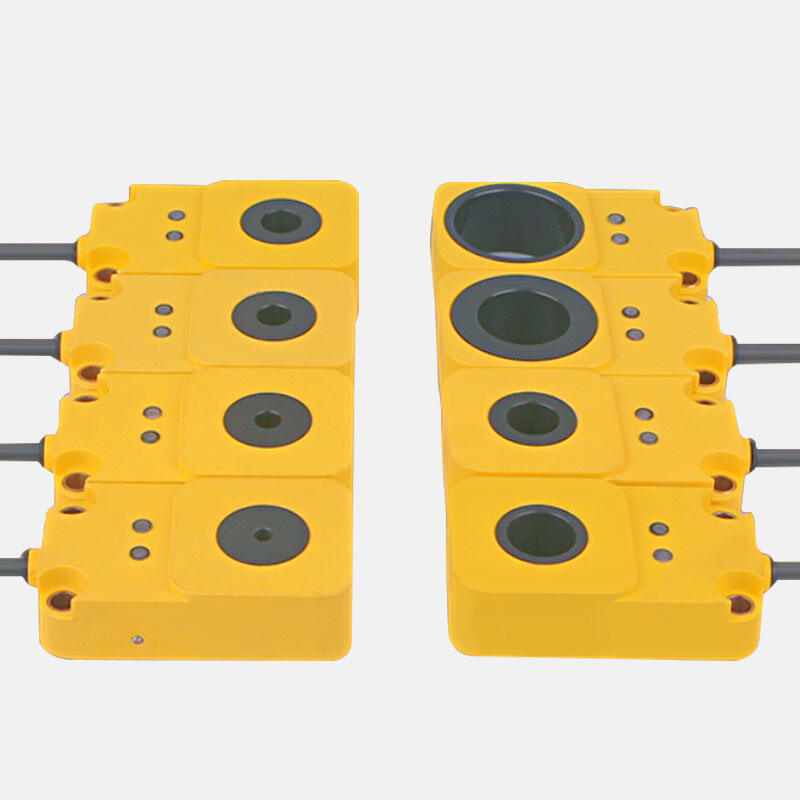
In modern industrial automation, the photoelectric sensor switch has become one of the most widely adopted detection technologies across manufacturing, logistics, packaging, and process control environments. Its ability to detect objects without physical contact, operate reliably across diverse conditions, and integrate seamlessly into automated systems makes it a preferred choice for engineers and procurement specialists alike. Understanding the specific advantages of this technology helps decision-makers select the right sensing solution for their application requirements.
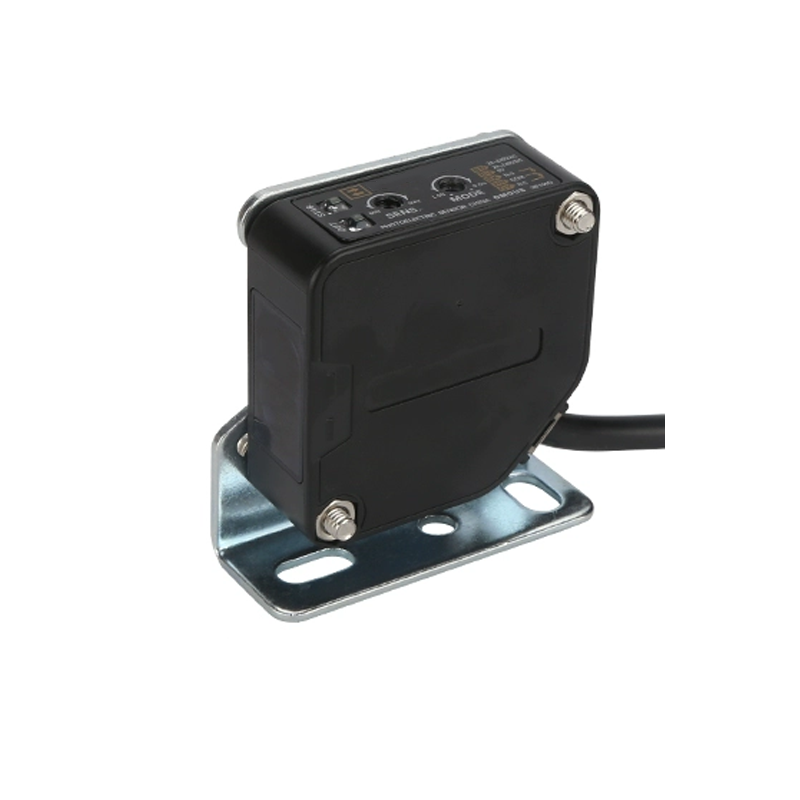
The photoelectric sensor switch operates by emitting a beam of light — typically infrared, visible red, or laser — and detecting changes in that beam caused by the presence, absence, or surface characteristics of a target object. This fundamental operating principle unlocks a broad range of performance benefits that mechanical or inductive sensing technologies simply cannot match. From high-speed detection to long sensing distances, the advantages of the photoelectric sensor switch are both practical and measurable in real-world industrial deployments.
Non-Contact Detection and Its Operational Benefits
Eliminating Mechanical Wear for Longer Service Life
One of the most significant advantages of the photoelectric sensor switch is its non-contact detection method. Because the sensor never physically touches the target object, there is no mechanical wear on either the sensor or the object being detected. This is a critical factor in high-cycle applications where a sensor may trigger thousands or even millions of times per day.
Mechanical limit switches, by contrast, rely on physical contact and are subject to wear, deformation, and eventual failure. The photoelectric sensor switch avoids these failure modes entirely, resulting in a longer operational lifespan and reduced maintenance intervals. For facilities running continuous production lines, this translates directly into lower downtime and reduced replacement costs over the equipment lifecycle.
Non-contact operation also means the sensor does not exert any force on delicate or lightweight objects. This is particularly valuable in electronics assembly, pharmaceutical packaging, and food processing, where product integrity must be preserved throughout the detection process.
Suitability for Fragile, Lightweight, and High-Speed Targets
The photoelectric sensor switch excels in applications where the target object cannot tolerate physical interaction. Thin films, glass panels, small electronic components, and soft packaging materials are all detectable without risk of damage. This capability opens up application possibilities that are simply not feasible with contact-based sensing technologies.
In high-speed conveyor systems, objects may pass the detection point at rates exceeding several hundred units per minute. The photoelectric sensor switch responds in microseconds, ensuring accurate detection even at these velocities. The combination of non-contact operation and fast response time makes it uniquely suited to demanding throughput environments.
Long Sensing Range and Flexible Detection Geometry
Extended Detection Distances Compared to Other Sensor Types
The photoelectric sensor switch offers sensing ranges that far exceed those of inductive or capacitive sensors. Depending on the operating mode and optical configuration, a photoelectric sensor switch can detect objects at distances ranging from a few millimeters to tens of meters. This flexibility allows engineers to position the sensor at a safe distance from the process, protecting it from heat, vibration, or contamination.
Through-beam configurations, where the emitter and receiver are mounted on opposite sides of the detection zone, typically achieve the greatest sensing distances. Retroreflective and diffuse-reflective configurations offer shorter but still substantial ranges, making the photoelectric sensor switch adaptable to a wide variety of installation constraints.
Long sensing range also simplifies installation in large-scale environments such as warehouses, loading docks, and automated storage and retrieval systems. A single photoelectric sensor switch can monitor wide areas that would otherwise require multiple shorter-range devices.
Versatile Mounting and Alignment Options
The photoelectric sensor switch is available in a variety of form factors, including cylindrical barrel housings, rectangular block designs, and compact flat-profile units. This range of physical configurations allows the sensor to be mounted in tight spaces, on moving machine components, or in fixed overhead positions depending on the application geometry.
Many photoelectric sensor switch models include adjustable sensitivity controls, teach-in programming, and alignment indicators that simplify setup and commissioning. These features reduce installation time and allow non-specialist technicians to configure the sensor correctly without specialized tools or extensive training.
Detection of Diverse Materials and Object Characteristics
Material-Independent Detection Capability
Unlike inductive sensors, which are limited to metallic targets, the photoelectric sensor switch can detect virtually any material — metal, plastic, glass, wood, cardboard, fabric, and liquid surfaces. This material independence makes it a highly versatile sensing solution across industries with mixed product lines or variable packaging formats.
The photoelectric sensor switch achieves this by responding to the optical properties of the target rather than its electrical or magnetic characteristics. As long as the object reflects, absorbs, or interrupts the emitted light beam in a detectable way, the sensor will register its presence. This principle applies consistently across a broad range of target materials and surface finishes.
In practice, this means a single photoelectric sensor switch model can often serve multiple detection tasks on the same production line, reducing the need for multiple sensor types and simplifying spare parts inventory management.
Color, Contrast, and Transparency Detection
Advanced photoelectric sensor switch variants are capable of distinguishing between objects based on color contrast, surface reflectivity, or optical transparency. Color mark sensors, for example, detect registration marks on packaging materials to synchronize cutting, printing, or labeling operations with high precision.
Transparent object detection is another specialized capability available in certain photoelectric sensor switch designs. Using polarized light or specific wavelength selection, these sensors can reliably detect clear glass bottles, plastic films, and other transparent targets that would be invisible to standard diffuse-reflective sensors.
This breadth of detectable object characteristics means the photoelectric sensor switch can address sensing challenges that would require entirely different technologies in other sensor families, consolidating detection capability into a single, well-understood platform.
Reliability in Demanding Industrial Environments
Robust Construction for Harsh Conditions
Industrial-grade photoelectric sensor switch units are engineered to withstand the physical and environmental stresses common in manufacturing and logistics settings. Sealed housings with IP67 or higher ingress protection ratings protect the internal optics and electronics from dust, moisture, and washdown fluids. This level of environmental protection ensures consistent performance in food processing plants, outdoor installations, and wet industrial environments.
The photoelectric sensor switch is also designed to tolerate vibration and mechanical shock within specified limits, making it suitable for installation on conveyor frames, robotic arms, and other moving structures. Stainless steel housing options are available for applications requiring chemical resistance or compliance with hygienic design standards.
Wide operating temperature ranges allow the photoelectric sensor switch to function reliably in both cold storage environments and high-temperature industrial processes. This thermal flexibility reduces the need for additional protective enclosures in many applications, simplifying installation and reducing total system cost.
Stable Performance with Minimal Drift
Modern photoelectric sensor switch designs incorporate temperature compensation circuits and automatic gain control to maintain consistent switching thresholds across varying ambient conditions. This stability is important in applications where false triggers or missed detections could cause production errors, safety incidents, or equipment damage.
Background suppression technology, available in many diffuse-reflective photoelectric sensor switch models, allows the sensor to detect objects within a defined distance window while ignoring surfaces or structures beyond that range. This feature significantly improves detection reliability in cluttered or reflective environments where background interference would otherwise cause problems.
The combination of robust construction and intelligent signal processing makes the photoelectric sensor switch a dependable component in safety-critical and quality-sensitive applications where sensor reliability directly affects production outcomes.
Integration Advantages in Automated Systems
Compatibility with Standard Industrial Control Architectures
The photoelectric sensor switch is designed for straightforward integration with programmable logic controllers, distributed I/O systems, and industrial communication networks. Standard output configurations including NPN, PNP, push-pull, and analog outputs ensure compatibility with the full range of control hardware used in modern automation systems.
IO-Link enabled photoelectric sensor switch models provide bidirectional digital communication, allowing the controller to read sensor diagnostics, adjust operating parameters remotely, and receive detailed process data beyond a simple switching signal. This connectivity supports predictive maintenance strategies and enables more sophisticated process control logic.
The availability of both light-on and dark-on switching modes, selectable either by wiring or software configuration, gives system integrators the flexibility to adapt the photoelectric sensor switch output logic to the specific requirements of each application without hardware changes.
Contribution to System Efficiency and Productivity
By providing fast, accurate, and reliable object detection, the photoelectric sensor switch contributes directly to overall system efficiency. Accurate part counting, precise positioning feedback, and reliable presence detection all depend on sensor performance, and the photoelectric sensor switch delivers these functions consistently across high-volume production cycles.
Reduced false trigger rates mean fewer unplanned stops and less manual intervention, both of which improve overall equipment effectiveness. The long service life of the photoelectric sensor switch also reduces the frequency of planned maintenance activities, freeing maintenance resources for higher-priority tasks.
In automated guided vehicle systems, robotic pick-and-place cells, and smart conveyor networks, the photoelectric sensor switch serves as a foundational sensing element that enables the precise spatial awareness these systems require to operate safely and efficiently.
FAQ
What makes a photoelectric sensor switch different from a proximity sensor?
A photoelectric sensor switch uses light to detect objects and can sense virtually any material at distances ranging from millimeters to meters. A proximity sensor typically uses inductive or capacitive principles and is limited to metallic targets or objects within a few centimeters. The photoelectric sensor switch offers greater sensing range and material versatility, making it suitable for a wider range of industrial applications.
Can a photoelectric sensor switch be used outdoors?
Yes, many photoelectric sensor switch models are rated for outdoor use with appropriate IP protection ratings and operating temperature ranges. However, direct sunlight can interfere with certain sensor types, particularly those using visible light. Infrared or laser-based photoelectric sensor switch models with background suppression and ambient light rejection are better suited for outdoor installations where sunlight exposure is a concern.
How does the sensing range of a photoelectric sensor switch affect installation choices?
The sensing range determines how far the sensor can be mounted from the detection point while still reliably detecting the target. A longer sensing range allows the photoelectric sensor switch to be positioned away from harsh process conditions such as heat, splatter, or mechanical impact. It also provides more flexibility in machine layout design, particularly in large-scale systems where mounting positions are constrained by structural elements.
Is a photoelectric sensor switch suitable for detecting transparent objects?
Standard diffuse-reflective photoelectric sensor switch models may struggle with transparent targets because clear materials transmit rather than reflect the emitted light beam. Specialized photoelectric sensor switch variants using polarized light, specific wavelength selection, or through-beam configurations with sensitivity adjustment are designed specifically for transparent object detection and provide reliable results in these challenging applications.